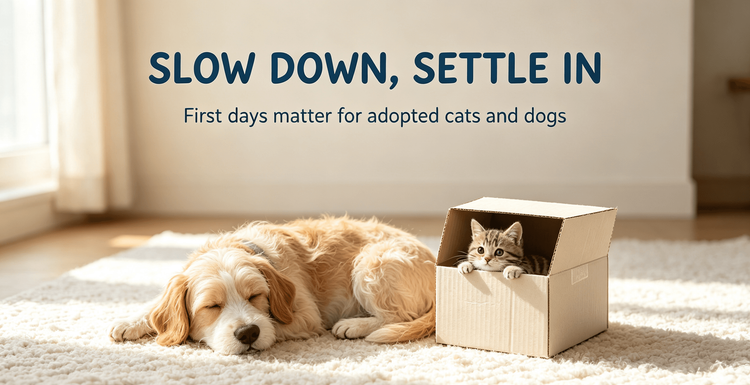
Anyone who has raised pets knows that adoption is far more than simply bringing a new animal home. We often assume that rescue cats and dogs will be overjoyed to have a permanent home and grow clingy and affectionate right away.
In reality, this is rarely the case. Many newly adopted pets hide and refuse food, pee randomly, bark at night, or chew furniture. Most new owners mistakenly label this behavior as disobedient or inherently naughty. In truth, almost all of these issues stem from stress caused by environmental changes.
Moving to a new place is extremely stressful even for humans, let alone sensitive cats and dogs. Cats in particular appear calm on the surface but are often terrified inside. They do not vocalize their fear; they simply endure it silently. Over time, this suppressed stress easily leads to urinary blockages, excessive shedding, and weakened immunity. Dogs show their stress more outwardly, yet unfamiliar surroundings, noises, and smells still leave them highly anxious and insecure.
From years of advising new adopters, I’ve noticed one common mistake: impatience. Many owners rush to cuddle, train, walk, and invite friends over to interact with their new pet. What feels like loving enthusiasm to us is overwhelming pressure for a newly rescued animal. This eagerness often stretches a short adjustment period into weeks of constant anxiety.
There are no shortcuts to helping pets adapt. You don’t need perfect results overnight, but you do need the right order. First, stabilize their emotions and relieve stress. Next, build daily routines and gentle boundaries. Finally, slowly introduce outdoor walks and social interactions. Taking it step by step always works best.
Before Adoption: Don’t Act on Impulse — Prepare First
Most people only focus on post-adoption care and overlook crucial pre-adoption preparation, which is the root of most behavioral and emotional problems later on. Countless cats and dogs struggle to settle in simply because their owners adopted on a whim with no real plan, leaving them panicked and unprepared once the pet arrives home.
Self and family evaluation is essential. Pet ownership is not a temporary hobby; it is a decade-long responsibility. Ask yourself honestly: Is my living situation stable enough for a pet? Do I have time in my work schedule to offer consistent companionship? Can I afford long-term costs for food, vaccinations, checkups, and medical treatment? Make sure every family member agrees to the adoption. Disagreements or unpreparedness can lead to rehoming or abandonment, inflicting secondary trauma on rescue pets.
Never choose a pet blindly based on trends. Different age groups come with vastly different care demands. Puppies and kittens require intensive time, constant supervision, and rigorous potty and routine training. Adult cats and dogs already have fixed personalities and habits; they skip basic training needs but need patience and gradual bonding. Senior pets have fragile health and require gentle, maintenance-focused care with minimal training pressure. Always choose a pet that matches your lifestyle and available energy.
Pet supplies do not need to be luxurious — functional, safe, and species-suitable is enough. For dogs, prepare food and water bowls, soft bedding, durable chew toys, a sturdy leash, and poop bags. For cats, essential items include a litter box, scratching post, hiding cave, and elevated perches. Cats naturally seek hiding spots and high vantage points, and these items greatly reduce their anxiety in unfamiliar environments.
Never skip home safety checks. Cats and dogs are intensely curious and love chewing and exploring tight spaces. Store away loose wires, sharp decorations, household medicine, and small choking hazards. Importantly, common household plants like lilies and green pothos are highly toxic to cats and must be removed or completely isolated. Block off gaps under beds, sofas, and cabinets to prevent entrapment and accidental ingestion injuries.
One of the most vital steps is gathering detailed information from previous owners or rescue staff. Ask about their original diet, daily schedule, food allergies, medical history, vaccination and deworming records, as well as their fears and behavioral flaws. Stick to their original routine as much as possible instead of making drastic changes immediately. Familiar habits drastically lower stress and speed up adaptation.
First 3 Days at Home: Less Interaction, Quiet Rest Works Best
The first three days are the peak stress period and the most critical window for building trust. During this time, intentional companionship, rushed training, and forced exploration are completely unnecessary.
Stick to three simple rules: minimal disturbance, no forcing, no overstimulating.
Newly arrived pets remain constantly on high alert. Unfamiliar spaces, human voices, appliance hums, and strange scents all register as potential dangers. Yet many owners overwhelm their pets with constant petting, hurried house tours, immediate walks, and nonstop introductions to friends and family. This dense stimulation traps pets in a state of persistent anxiety, leaving them unable to relax or rest properly.
In these early days, giving space matters far more than constant attention. There is no need to stay by their side 24/7, and never force a hiding pet out for interaction — scolding or teasing is strictly off-limits. Assign your dog a quiet, low-traffic, shaded area for free movement. For cats, isolate them in a single quiet room first. For timid felines, a small enclosed space feels far safer than a large, noisy house.
Sleeping more, hiding in corners, eating less, and staying motionless are all normal self-protective behaviors. Resist the urge to check on them repeatedly or disrupt their peace. Let them observe, explore tentatively, and slowly confirm that their new home is safe. Their mood will relax naturally over time.
Keep their diet extremely consistent. Continue their original food entirely — no sudden food switches, extra snacks, or human food. A stressed digestive system is very fragile, and dietary changes easily cause soft stools and diarrhea. Even if they skip one or two meals, do not panic; this is typical during adaptation. Constant coaxing or frequent food changes only increase their psychological pressure. Simply provide clean, fresh water at all times.
Limit external distractions significantly during the first week. Avoid visitor gatherings, photo sessions, and playful disturbances. Prevent loud shouting or running children, and lower noisy appliance volumes. A calm, stable home environment helps stressed pets let their guard down and settle in peacefully.
Weeks 1–2: Build Stable Routines and Gentle Household Rules
After three days of quiet adaptation, cats and dogs grow familiar with their new home’s scent and environment, and their tension gradually eases. This is the perfect time to establish consistent daily routines. Any experienced pet owner knows that predictable daily rhythms are the foundation of a pet’s sense of security.
Mealtimes, water access, potty breaks, activity periods, and rest times do not need military precision, but they do need stability. For dogs, fix feeding schedules and walking routes. Stick to short, slow walks at first to explore the neighborhood gently, avoiding crowded parks and busy areas to prevent overexertion. For cats, never move litter boxes, beds, or food bowls randomly. Stable home layouts reduce anxiety and prevent stress-induced inappropriate urination.
Once routines stabilize, introduce simple household rules with gentle guidance — harsh scolding is never needed. Skip intensive formal training at the start and focus on basic boundaries: guide dogs to avoid indoor peeing, furniture chewing, and jumping on people; respect cats’ privacy and boundaries, avoiding forced cuddles or chasing.
Newly settled pets are emotionally vulnerable and sensitive. Shouting, physical punishment, and forced restraint instantly destroy fragile trust, leaving long-term psychological scars that make future training far more difficult.
Start practicing alone-time training early to prevent separation anxiety. Most adopted dogs are extremely clingy and follow their owners everywhere. Cats are the opposite — they stay tense and unable to relax whenever people are nearby. At home, briefly leave your dog alone in its safe zone. For cats, maintain calm coexistence without constant staring or interaction. Gradually teach them that temporary solitude and short owner absences are completely safe.
Keep simple daily observation records to spot abnormalities early. Track your dog’s appetite, stool condition, outdoor behavior, and energy levels. For cats, monitor food and water intake, litter box frequency, hiding duration, excessive grooming, and breathing status. These simple observations help you distinguish normal adjustment fluctuations from stress symptoms or emerging illnesses, guiding timely care and vet visits.
Common Beginner Mistakes Most New Owners Make
Honestly, most pet adaptation issues, mood swings, and chronic stress are not the pet’s fault. They come from well-meaning owner behaviors that accidentally amplify anxiety.
Do not rush intimacy. Frequent touching, hugging, teasing, and forced eye contact keep dogs chronically tense and push cats into fearful withdrawal. Dogs may develop nighttime restlessness, barking, and picky eating, while cats suffer from overgrooming, hiding, and severe urinary problems. True bonding grows slowly through consistent companionship, not forced interaction.
Do not overcompensate with food out of sympathy. Many owners feel sorry for their shy new pet and immediately upgrade expensive food, offer excessive snacks, or feed human meals. A transitioning pet’s stomach is highly unstable; sudden dietary changes cause gastrointestinal disorders and picky eating habits that are extremely hard to correct later.
Do not rush intense training and early socialization. Before pets feel secure, all training is ineffective and only adds mental pressure. Early exposure to complex outdoor environments, strangers, and other dogs easily triggers timidity, leash pulling, and reactive barking. Cats require zero early outdoor socialization. Forced contact and excessive attention max out their stress levels and cause long-term psychological damage.
Avoid inconsistent rules and double standards. Allowing jumping, furniture chewing, and messy behavior one day, then scolding harshly the next confuses pets completely. Dogs become restless and unpredictable, while cats grow sensitive, suspicious, and insecure, disrupting the entire adaptation process.
Health Check: Tell Normal Adaptation Apart From Severe Stress
Mild stress during home adaptation is completely normal and nothing to overreact to. Reducing stimulation, restoring regular routines, and offering quiet companionship usually resolve minor issues naturally. However, severe stress is extremely harmful — especially for cats, whose symptoms develop rapidly and invisibly, often leading to serious emergencies without early detection.
Normal mild stress signs include slightly reduced appetite, lower energy, increased napping, occasional avoidance of people, and restless sleep. These are typical adaptation reactions that improve with quiet rest.
Immediately intervene and seek veterinary care if you notice any severe warning signs.
Stop all interaction, walks, and play activities right away if your pet shows persistent refusal to eat or drink, repeated vomiting or diarrhea, bloody stool or vomit, constant trembling, extreme lethargy, prolonged hiding, frantic pacing or howling, and rapid breathing. For cats, frequent litter box visits with no urination, bloody urine, and excessive private-area grooming are urgent medical emergencies that require immediate treatment.
Lastly, no matter how healthy or energetic your new pet appears, schedule a full veterinary checkup within the first week. Complete all missing vaccinations and internal/external deworming, and screen for hidden inflammation, skin diseases, digestive issues, and feline urinary system risks to safeguard their long-term health.
Adoption is a two-way journey of healing and companionship. Every rescue cat and dog has experienced wandering and insecurity. Dogs thrive on consistent company and routine; cats thrive on quiet environments and