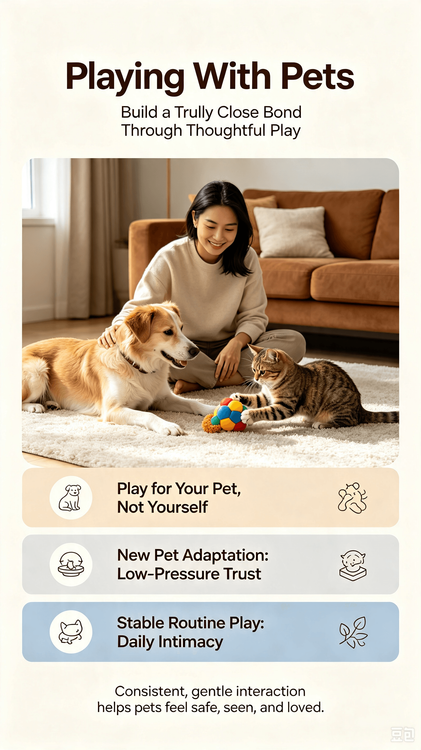
After years of raising pets and helping countless new pet parents fix awkward pet relationships, I’ve learned one simple truth: casual affection isn’t enough. Thoughtful, regular interactive play is what actually builds real trust and emotional closeness with your pets.
Treats and cuddles only create momentary warmth. They make your pet feel comfortable for a little while, but they don’t build lasting emotional connection. Play, on the other hand, is the only genuine communication bridge between you and your furry friend. Every fun, positive interaction triggers oxytocin—the “bonding hormone” — for both you and your pet. This is why consistent good play habits turn a shy, unfamiliar pet into one that actively seeks your company, trusts you, and sticks by your side.
Don’t ever think play is just a way for pets to kill time. For cats and dogs, every game means something. Dogs see interactive play as teamwork; it’s how they recognize you as their safe person and build a sense of belonging. Cats are a little different—they use hunting-style play to release stress and check if their home feels secure.
Bad play habits are way more harmful than most people realize. Mindless teasing, cutting a game short randomly, or playing half-heartedly doesn’t just fail to bring you closer. It makes your pet confused, anxious, and even defensive. Over time, these small repeated mistakes create emotional distance, leaving you wondering why your pet never warms up to you.
Bonding through play isn’t about fancy tricks or rushed daily routines. There’s no one-size-fits-all magic method. But there is a natural, practical way to do it right. Start by following your pet’s instincts instead of your own preferences, learn how to play properly at different adaptation stages, build steady daily interaction habits, and stay away from common newbie errors. Take it slow, adapt to your pet’s pace, and a solid, loving bond will form naturally.
First Rule: Play For Your Pet, Not For Yourself
Most failed bonding attempts start with self-centered play. We pick toys we think look cute, play games we find fun, and wonder why our pet seems bored or uncooperative. The problem is simple: we’re ignoring what our pets actually need.
Dogs are social pack animals through and through. They hate playing alone with stationary toys. What they crave most is real back-and-forth interaction with their owner. Tug-of-war, casual fetch games, and simple indoor scent-tracking hunts are perfect for them. These activities let them cooperate, respond, and engage with you directly. Every time they successfully interact and play with you, their trust and attachment grow a little stronger.
Cats are total opposites. As natural solitary hunters, they hate chaotic, forced play. Fast-moving laser pointers with no tangible reward, endless chasing, and forced interaction only frustrate and stress them out. Felines thrive on simulated hunting play—feather wands that mimic flying birds, toy mice that scurry across the floor, and hidden food foraging games. The key is letting your cat “win” regularly. Every successful catch or find gives them a huge confidence boost and makes them feel safe and happy around you.
Also, always match your play style to your pet’s age and energy level. Puppies and kittens are super hyper but tire out quickly. Short 5–10 minute low-key play bursts are ideal to avoid overexcitement and exhaustion. Adult pets have stable energy, so two 15–20 minute structured play sessions every day work perfectly. For senior cats and dogs, keep things extremely gentle. Skip all intense chasing and tugging games. Simple foraging and soft toy interaction are more than enough to keep them engaged without straining their bodies.
Stage 1: New Pet Adaptation — Low-Pressure Play To Win Initial Trust
The first one to two weeks after bringing a new pet home is the most critical trust-building window. A lot of new owners get overly excited here. They rush to play, tease, and interact nonstop, eager to bond right away. But this is actually one of the biggest mistakes you can make.
New pets are already overwhelmed by a brand-new environment. Strange smells, unfamiliar noises, and a new owner all make them feel vigilant and insecure. At this stage, play isn’t for fun—it’s for calming their nerves and building positive first impressions.
Stick to a simple core principle during this period: let your pet lead, and keep all interference minimal. Don’t take the initiative to tease them, don’t force them to play, and never corner them for interaction. Set up quiet, low-stimulation toys in their safe, favorite corner of the house, then step back. Let them explore and play on their own whenever they want. You can stay nearby quietly, but avoid staring or interrupting their little exploration sessions.
If your new pet is particularly shy or timid, you can guide them gently with inductive play. Wiggle a toy softly from a distance to grab their attention, and stop immediately once they show curiosity. Wait for them to take the first step to approach and touch the toy. Every small brave move deserves soft verbal praise or a tiny treat. Slowly, they’ll start associating your presence with safety and happiness, and their wariness will fade little by little.
It’s totally normal if your new pet shows zero interest in games at first. Don’t panic, don’t overthink it, and definitely don’t keep coaxing them to play. For new pets, calm, undisturbed peace is far more important than forced interaction. Once they settle in and confirm that your home is a safe place, they’ll naturally start coming to you for play and attention.
Stage 2: Stable Routine Play — Build Long-Term Intimacy
After two weeks or so, your pet will be fully familiar with your home, no longer skittish, and completely relaxed around you. This is the perfect time to build a steady daily play routine and deepen your bond further.
Random, sporadic play only brings temporary excitement. One day you play for an hour, the next day you ignore them entirely—this inconsistent rhythm confuses pets and stops true bonding from happening. High-quality bonding play needs simple stability: fixed time, gentle rules, and a clear start and end to every session.
I always tell new owners: consistency beats intensity. You don’t need super long play sessions. Just 15–20 minutes of focused interaction in the morning and evening every day is enough. This steady routine creates happy anticipation in your pet. They’ll start looking forward to your daily playtime, and this positive expectation will turn into active closeness in daily life.
For dogs, prioritize cooperative interactive games. Tug-of-war is my top recommendation for bonding. You just need to set gentle boundaries: you control when the game starts and stops, let your dog win occasionally to build their confidence, and guide them to drop the toy on command. This mixes fun play with simple obedience training naturally. Fetch and indoor scent-tracking games also work great. As your dog repeatedly responds and cooperates with you, their sense of trust and dependence on you will keep growing.
For cats, stick to simulated hunting play at all times. Move feather wands like flying birds and toy mice like scurrying small prey, keeping the pace slow and natural. Never move toys too fast or make your cat chase endlessly without success. Repeated failure makes them frustrated and uninterested. Let them “catch” the toy frequently, and reward them occasionally. Every positive play experience ties joy and security directly to you, making your cat more willing to approach and bond with you long-term.