I’ve worked with dozens of cat parents over the last few years, and almost every single one made the same dangerous rookie mistake: cutting meals drastically to force fast weight loss. Cats aren’t small dogs or humans—skip meals for just two full days, and they’re at serious risk of fatty liver disease, a life-threatening condition that lands countless kitties in emergency vet clinics each year.
This guide pulls together hands-on home tweaks, slow feeding routines, low-stress play ideas, and real lessons I picked up from my own overweight rescue cat Mochi, plus advice from local feline behavior specialists and our regular clinic vet. There’s no harsh crash dieting, no stressful chase sessions to burn calories, just gradual, gentle shifts that stick long-term—exactly the same slow, compassionate approach we use to fix sofa scratching, litter box avoidance, or stressful cat carrier fears in our other behavior guides. Before you cut a single kibble portion, let’s start with the basics most owners skip entirely.
First: Figure Out If Your Cat Is Actually Carrying Too Much Weight
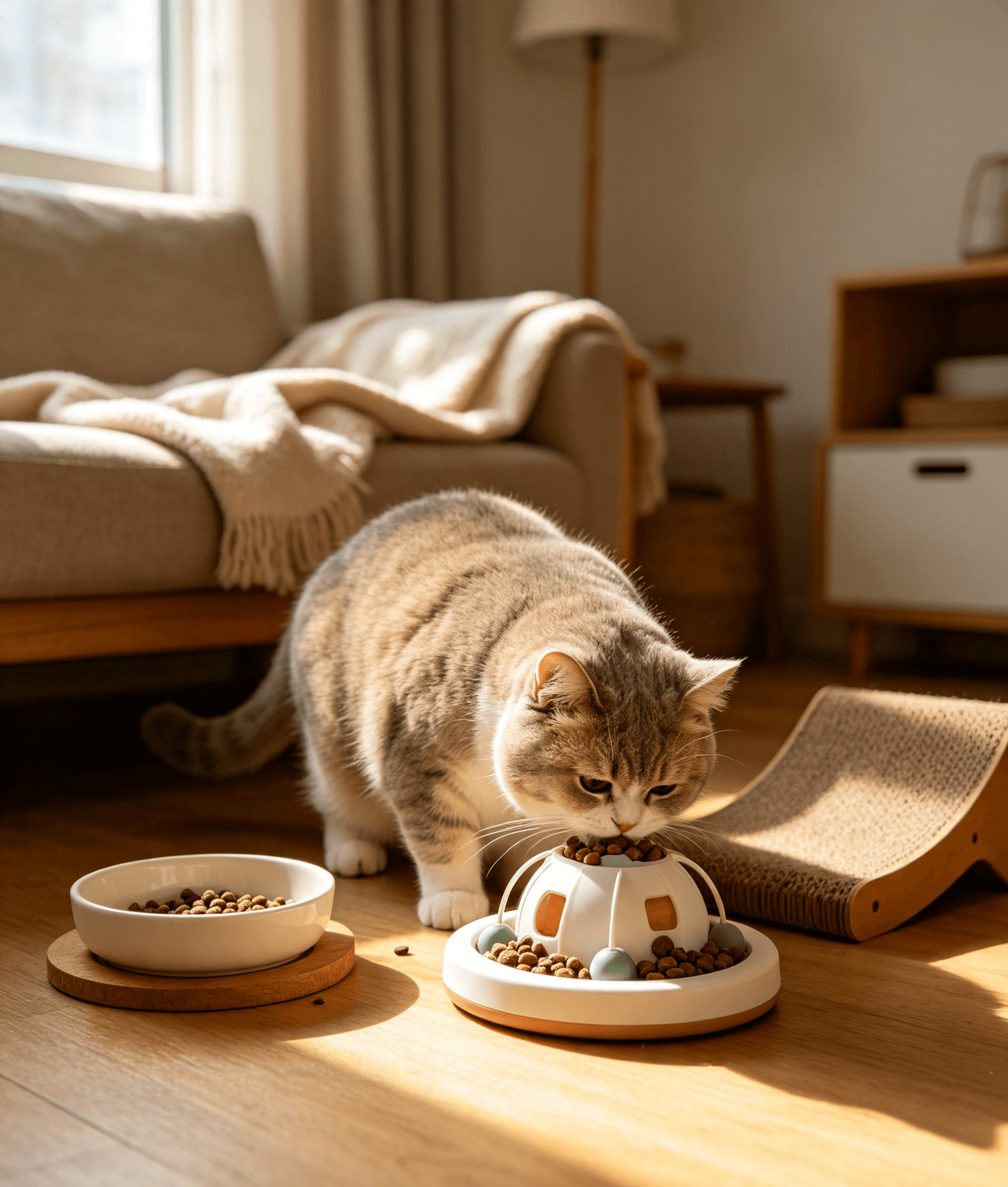
It’s shockingly easy to mistake thick fur or a big bone structure for a healthy build. I used to swear my Mochi was just “stocky” until our vet ran a full body condition check and broke down the 9-point BCS scale for me. You can run this quick check at home in two minutes flat, but I always recommend a full vet visit first to rule out medical issues that cause unexpected weight gain—thyroid imbalances, fluid retention, and organ dysfunction all add pounds that diet alone can’t fix.
The simple home body check works like this:
- Ideal weight (4–5 score): Ribs sit under a thin soft layer of fur, you can feel each rib easily with light pressure. When you look down from above, there’s a clear tucked waist behind their ribcage; only a tiny soft belly pouch exists, no sagging fat dragging low.
- Overweight (6–7 score): Ribs are buried under dense fat, you have to press hard to feel any definition. The waistline vanishes completely, and a heavy, floppy belly hangs down when they walk or jump onto the couch.
- Obese (8–9 score): No rib texture detectable at all, their torso looks round like a barrel even from overhead. Moving around takes visible effort—they huff after jumping a short distance, avoid stairs or cat trees entirely, and struggle to groom their lower belly and hind legs.
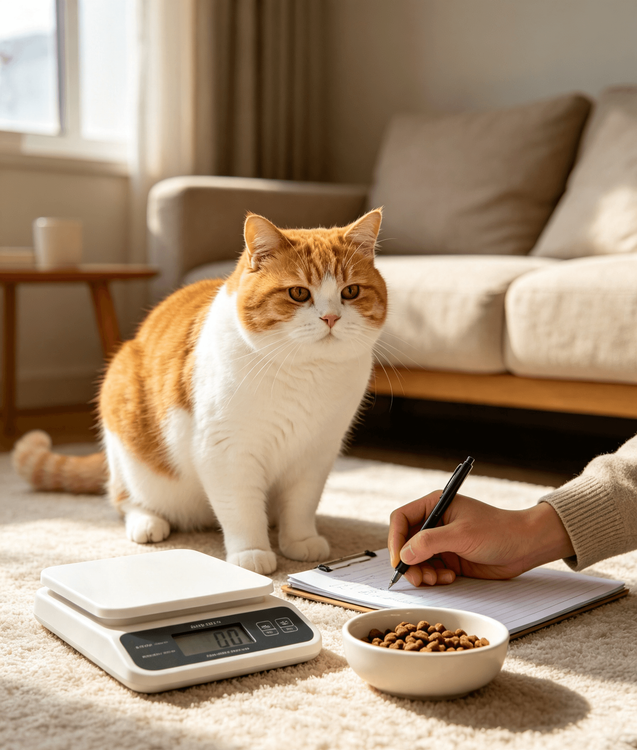
Vets generally mark a cat as overweight once they hit 15% above their breed’s healthy target weight; anything over 30% extra body mass counts as clinical obesity. Grab a basic kitchen scale to log their current weight, then ask your vet to calculate a personalized target weight—this number dictates every calorie you’ll measure moving forward.
It’s not just a cosmetic issue, either. That extra layer of fat chips away at their quality of life in quiet, permanent ways: insulin resistance and feline diabetes are the most widespread risk, followed by inflamed joints that make daily movement painful. Heavy cats face far higher odds of pancreatitis, urinary crystals, and heart strain, plus way higher anesthesia risk if they ever need surgery down the line. They stop playing, skip self-grooming, and wind up stuck in a cycle of stress and low energy that’s tough to reverse without slow, consistent care.
Calorie Control: The Real Foundation of Safe Cat Weight Loss
I’ve watched countless cat owners try starvation diets thinking it would speed up weight loss, only to end up rushing their cat to emergency care. Safe weight loss for cats follows one unchanging rule: shed between 0.5% to 2% of their current body weight each week. Older kitties, severely obese cats or skittish rescue felines should stick to the slower 0.5% to 1% weekly rate; this protects muscle tissue and keeps their liver safe throughout the whole process.
Stop free-feeding right away
Leaving bowls full of kibble out all day is the top cause of overweight indoor cats. Cats will graze mindlessly out of boredom, losing their natural sense of fullness over time. Replace unlimited food with timed, portioned feeding. Split their daily food allowance into three or four small meals throughout the day; it cuts down begging behavior and prevents your cat from feeling constantly hungry.
Weigh every serving, don’t guess portions
Guessing food portions with regular spoons or cups often leads to overfeeding by 30% to 50% without you realizing it. A cheap digital kitchen scale is all you need to measure meals accurately. Your vet can calculate your cat’s resting energy requirement based on their healthy target weight, then feed roughly 70% to 80% of that value each day to create a mild calorie deficit.
Don’t forget to count every single calorie going into their bodies. Dry food, wet canned meals, treats, dental chews, even small bites of plain chicken you sneak them as snacks all add up. Treats should never make up more than 10% of their daily calorie intake. If your cat constantly begs for snacks out of boredom, swap high-calorie commercial treats for tiny pieces of plain boiled chicken or freeze-dried single-meat snacks instead.
Choose proper weight-management cat food
Simply cutting the portion size of regular cat food won’t work well. Your cat will lose muscle mass, lack key nutrients and act cranky from persistent hunger. Weight control cat food is formulated differently: high animal protein preserves muscle while burning fat, low carbs and moderate fat stop extra fat accumulation, and added fiber keeps them full for longer without excess calories. Mix wet food into their diet too; higher moisture content naturally lowers calorie density and prevents overeating.
Whenever you switch food brands or formulas, transition slowly over seven days. Mix increasing amounts of new food with old food day by day, otherwise your cat might develop diarrhea, vomit or refuse meals entirely.
Weekly weight tracking makes all the difference
Weigh your cat once a week at the same time, ideally before they eat and after they’ve used the litter box, using the same scale each time to avoid inaccurate readings. Keep a simple notebook to record their weight:
- Two consecutive weeks with zero weight loss: reduce daily food portions by 5% to 10%.
- Weight drops faster than 2% weekly: add a small serving of wet food to slow down weight loss and safeguard liver health.
Low-Stress Play & Home Layout Changes to Burn Extra Calories
Indoor cats sleep most of the day and barely move, which explains why so many house cats gain weight easily. Adding light exercise doesn’t mean forcing your lazy cat to run nonstop. All activity should align with a cat’s natural predatory habits, never push a tired, stressed cat into playing.
Split playtime into short hunting-style sessions
Cats hunt in quick bursts of energy in the wild instead of long runs. Aim for roughly 20 minutes of play each day, broken into three or four short 5 to 7 minute sessions during dawn and dusk — their most active natural hours. Use feather wands, crinkly mouse toys or laser pointers to get them pouncing, running and jumping around. Always finish each play session with a tiny snack reward, mimicking the feeling of catching prey in the wild; this stops your cat from growing frustrated after playtime.
For cats that are too heavy to jump up high at first, stick to floor-chasing games only. Gradually introduce low-height jumps as their stamina improves over weeks.
Rearrange your home to encourage spontaneous movement
You don’t need fancy cat gym equipment to get your cat moving more. Tiny household adjustments create constant light movement throughout their day:
- Place food and water bowls on low stools or stacked sturdy boxes, so your cat has to stand and climb slightly to eat and drink.
- Set water bowls in separate rooms around the house; your cat will walk between spots to drink water more often.
- Install cat wall shelves, small cat trees for climbing and perching, adding vertical space satisfies their climbing instincts naturally.
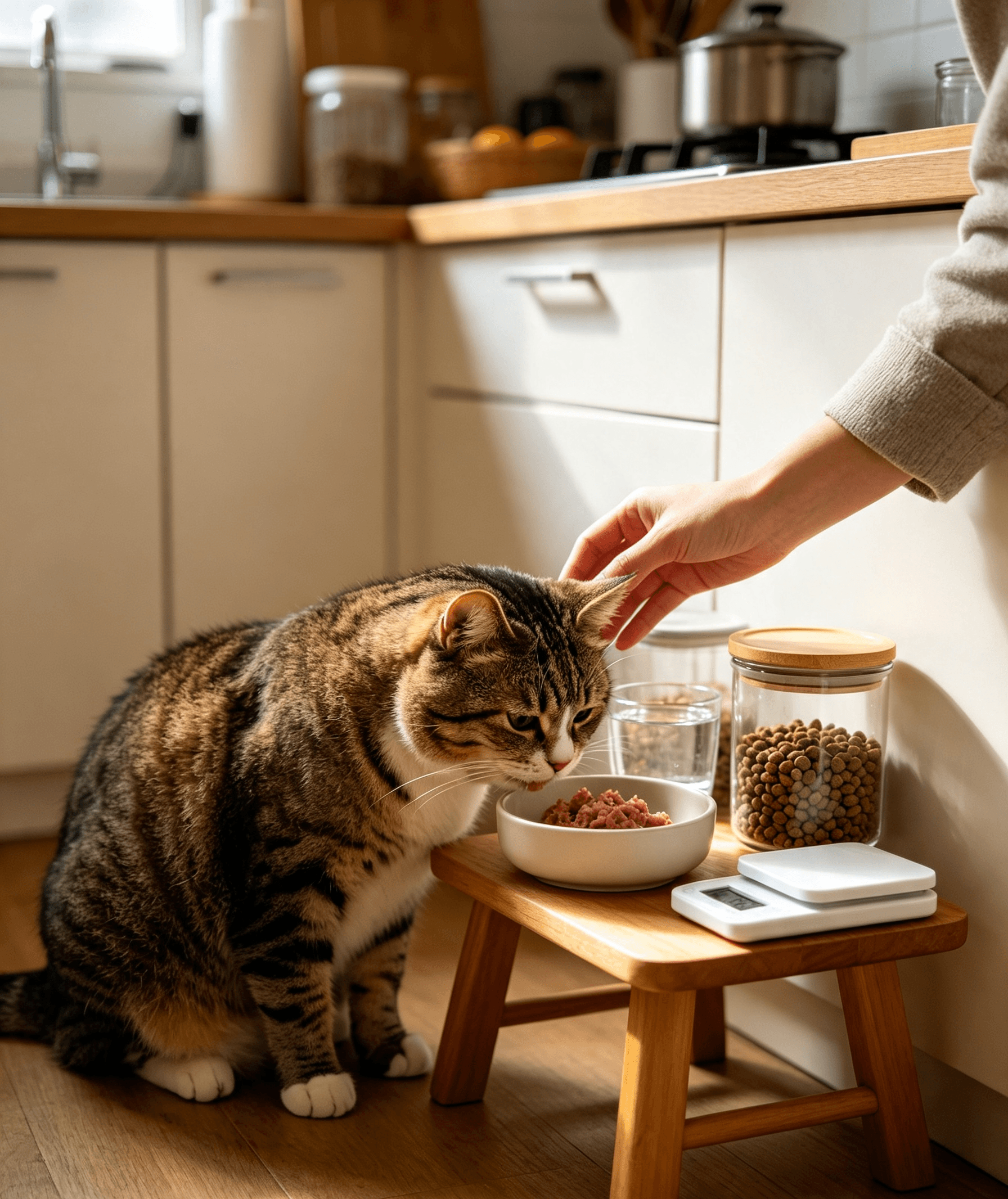
- Hide kibble inside puzzle feeders and treat balls. Instead of finishing food in ten seconds flat, cats have to sniff, roll and hunt for every piece of food.
One extra tip I learned from a behavior consultant: if your cat stares out windows all day watching stray cats outside, they’ll stress eat to calm anxiety. Use thin sheer curtains or place their perches facing quiet garden areas to cut down overstimulation; this eliminates anxiety-driven overeating effectively.
Weight Loss Strategies for Multi-Cat Households
Losing weight with multiple cats living under one roof brings unique challenges. Overweight cats often steal food from slimmer kitties, competition during mealtime triggers stress eating, and individual activity levels vary wildly. These easy fixes solve most problems:
Feed each cat inside separate closed rooms during meal times, take all food bowls away after 15 minutes no matter if they finish eating or not. Every cat gets its own puzzle feeder so you can control each pet’s calorie intake individually. Create separate play corners too, so your chubby cat can play without being interrupted or bullied by other cats. Store all bulk dry food inside locked cabinets so no cat can sneak extra food when you’re not looking.
Warning Signs That Mean You Need Vet Help Immediately
Do not continue your home weight loss plan and contact a veterinarian right away if you spot any of these red flags; these symptoms may point to hidden illness or extreme stress:
- Your cat refuses all food for 24 hours or longer — rush to the vet straight away to prevent fatty liver disease.
- Sudden tiredness, vomiting, yellow gums or eyes, breathing difficulties.
- Unusual aggression toward you or other household pets caused by extreme hunger stress.
- No weight loss whatsoever after four weeks of strictly following your feeding schedule.
- Litter box avoidance, excessive overgrooming or destructive scratching brought on by diet-related frustration.
Vets will run blood tests to rule out underlying diseases and adjust calorie plans to fit your cat’s physical condition. Professional feline behavior experts can design gentle enrichment routines for cats that beg constantly or eat out of anxiety.
Keep Weight Stable After Hitting the Healthy Target
Once your cat reaches its ideal healthy weight, don’t revert back to old feeding habits or all the progress will disappear quickly. Follow these permanent lifestyle changes to maintain their weight long term:
- Increase daily food calories by roughly 10% to 15% compared to their weight-loss portions, matching their regular maintenance energy needs.
- Keep timed portion feeding and puzzle feeders permanently; never go back to leaving food out all day again.
- Stick to daily play sessions and vertical climbing enrichment all year round.
- Reserve high-calorie treats only for special occasions like birthdays or vet visits as rewards.
- Weigh your cat once every month, catching slow weight gain early before they become overweight again.
Final Thoughts
Helping a chubby cat lose weight isn’t about strict deprivation or endless exercise. It’s a combination of careful feeding rules, activities that match their natural instincts and small household lifestyle changes that stick permanently. Just like fixing unwanted scratching behavior or introducing a new cat to your home, real sustainable results always come from slow, gentle adjustments instead of rushed, harsh methods.
Losing weight slowly keeps your cat’s liver safe, eases pressure on sore joints and lifts their mood little by little. Before you know it, your lazy round cat will be darting around the house, grooming itself properly and enjoying a longer, healthier life beside you.