

Look at sleep, enrichment, visitors, sounds and rewards before labeling a pet as stubborn.
- Track triggers before correcting
- Reward the behavior you want repeated
- Use qualified help for fear or aggression
Safety note: This article provides general pet behavior education only. It is not a veterinary diagnosis or a substitute for a qualified behavior professional. Contact a veterinarian or certified behavior professional if behavior changes suddenly, includes aggression, self-injury, panic, house-soiling with pain, or signs of illness.
By Best Pet Care Guide Editorial Team
A cat scratching the sofa is easy to describe as misbehavior because the damage is visible. The arm of the couch has threads hanging from it. The new chair has little crescent marks. Someone buys a scratching post, places it in a spare corner, and feels confused when the cat walks past it to return to the furniture.
The problem is not that the cat failed to understand the assignment. Scratching is not just nail maintenance. It is stretching, scent marking, stress relief, and a way to leave a visible signal in a place that matters to the cat. If the only approved scratching surface is hidden in a quiet room while the sofa sits in the center of family traffic, the sofa may make more sense from the cat’s point of view.
Editorial note: Written by the Best Pet Care Guide Editorial Team and reviewed for source quality, practical safety boundaries, and plain-language clarity.
If you are checking the whole setup rather than one habit, keep when window watching stresses an indoor cat and introducing a new cat without rushing the first week open as companion notes.
Quick Summary: Redirect Scratching Instead of Punishing It
Do not start by scolding the cat. Start by making the correct scratching place more useful than the sofa.
- Put a stable scratching surface beside the damaged furniture.
- Match the surface to what the cat already likes: vertical, horizontal, cardboard, sisal, carpet, or wood.
- Protect the old target temporarily.
- Add short daily play and more resting choices.
- Check for stress or medical changes if the behavior is sudden.
What the scratching location tells you
Look at where the cat already scratches
Location tells you more than the price of the scratching post. Many cats scratch near sleeping areas after waking up. Others scratch near doorways, windows, or the route between rooms. Some scratch the sofa because it is beside the person they like most.
Before buying anything else, watch for patterns. Does the cat scratch after meals, after play, when guests arrive, or when another pet walks by? Is the target vertical like a sofa arm, horizontal like a rug, or angled like the side of a box? Does the cat stretch tall or crouch low?
Matching the surface and location is more useful than adding random options. A cat that likes the tall corner of a couch may ignore a short horizontal cardboard pad. A cat that scratches carpet may not care about a rope-covered post.
Make the better choice easier than the sofa

Stable vertical surfaces often work better than small hidden scratchers. Photo by Arina Krasnikova on Pexels.
Place the new scratching surface directly beside the damaged area at first. It may look awkward for a week, but convenience matters. The post should be stable enough that it does not wobble when the cat leans into it. Many cats dislike posts that shift under their weight.
If the cat scratches vertically, choose a tall post or panel that allows a full stretch. If the cat scratches horizontally, use a sturdy cardboard or sisal pad on the floor. For cats that scratch both ways, offer both rather than trying to decide for them.
Encourage the post without forcing the cat’s paws onto it. That can make the surface unpleasant. Instead, use a short play session around the post, sprinkle a small amount of catnip if the cat responds to it, or reward the cat calmly after using it.
What not to do
- Do not punish scratch marks you found later. The cat will not connect the scolding to the earlier behavior.
- Do not hide every scratching surface in a spare room.
- Do not buy a short, wobbly post for a cat that likes full-body stretching.
- Do not rely on nail trims alone. Trims reduce damage but do not replace scratching.
- Do not ignore sudden behavior changes that arrive with litter box, appetite, or grooming problems.
Add play that uses the whole body
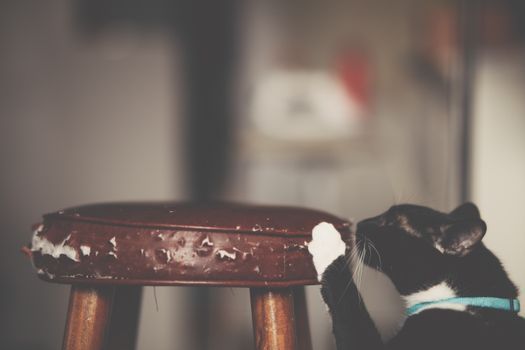
A bored indoor cat may scratch more because the day has too few ways to move, stalk, climb, and work for food. Cornell Feline Health Center resources describe environmental enrichment as a way to support normal feline behaviors, reduce stress, and give indoor cats more appropriate outlets. That point matters: furniture scratching is often one visible symptom of a home that does not offer enough legal outlets.
Try two short play sessions each day rather than leaving every toy on the floor. Wand toys should be put away after use so the string is not chewed or swallowed. Let the toy move like prey: away from the cat, behind a chair, across the floor, then into a final catch. Ending with a small treat or meal can make the sequence feel complete.
A simple enrichment week
A 7-Day Sofa-Scratching Reset
Use one week to test the environment before deciding the cat is simply stubborn.
Check stress before blaming stubbornness
Changes in scratching can follow changes in the home. A new cat outside the window, a moved litter box, construction noise, a visiting dog, a baby gate, or a new work schedule can all alter a cat’s sense of territory. The sofa may be scratched more because it carries familiar household scent and sits in a socially important place.
Give the cat more than one resting option. A perch near a window, a quiet room, a covered bed, or a high shelf can let the cat choose distance without hiding under furniture all day. In multi-cat homes, spread resources out. Food, water, litter boxes, resting spots, and scratching surfaces should not all be clustered in one high-traffic area.
Key terms to watch
- Vertical scratching: full-body stretch on posts, sofa arms, door frames, or panels
- Horizontal scratching: scratching rugs, cardboard pads, carpet edges, or mats
- Territory marking: scratching in socially important routes or near resting areas
- Stress signal: a behavior change that appears with hiding, overgrooming, litter box changes, or appetite shifts
Test the replacement before moving everything
Put the new scratching surface close to the sofa first, not across the room. If the cat already scratches one sofa arm after waking, the replacement should appear near that exact traffic path. Once the cat uses it reliably, you can slowly shift the setup if needed.
Texture matters. Some cats want sisal, some want cardboard, and some need a tall vertical post that does not wobble. The International Cat Care scratching guidance is useful because it treats scratching as normal communication and maintenance behavior, not stubbornness.
When behavior needs professional help
Ask a veterinarian or qualified behavior professional for help if the behavior appears suddenly, includes biting or repeated aggression, causes injury, involves panic, happens with pain or appetite changes, or gets worse despite calmer handling. Training works better after pain, fear, and medical causes are considered.
Scratching is information, not revenge
Cats scratch to maintain claws, stretch, mark, and manage arousal. A sofa becomes the target when it is stable, visible, textured, and placed where the cat already spends time. The solution is not only “buy a scratching post.” The post has to compete with the sofa.
Place the alternative near the problem area first. Once the cat uses it reliably, you can slowly move it if needed.
Match the surface before blaming the cat
Some cats prefer vertical sisal. Others prefer horizontal cardboard, carpet-like texture, wood, or angled scratchers. Height and stability matter. A light post that wobbles will lose to a sofa every time.
Protect the sofa temporarily while the better option becomes familiar. Punishment usually teaches the cat to scratch when people are not watching.
When scratching points to stress
If scratching suddenly increases with hiding, urine marking, aggression, appetite change, overgrooming, or conflict with other pets, look beyond the furniture. The scratching may be part of a stress pattern or medical issue. Sudden behavior changes deserve a veterinarian’s input.
Related reading for the same problem
For nearby behavior routines, compare what to check when a cat stops using the litter box and new cat introductions without rushing.
A scratching cause checklist
Start with the object, then the environment, then health. First ask whether the scratcher is tall, stable, and close to the sofa. Then ask whether the cat has enough legal scratching surfaces, resting places, and predictable play. Then look for stress: new pets, outdoor cats, visitors, moved furniture, or blocked paths. If scratching appears with limping, appetite change, hiding, or overgrooming, involve a veterinarian.
This order prevents random product buying. The sofa is usually winning because it fits the cat better than the offered alternative.
What not to do
Do not hit, shout, spray, chase, or punish the cat. Do not use painful deterrents or consider declawing as a furniture solution. Punishment often teaches the cat to scratch when people are absent and can increase fear. Declawing is an amputation procedure and can create lasting pain or behavior problems.
Use redirection, better surfaces, temporary sofa protection, and stress reduction instead.
Different ages need different scratching setups
Kittens scratch while exploring, stretching, and learning how their claws work. Use low, stable scratchers near play areas, reward the kitten for choosing them, and move fragile fabric out of the practice zone. Do not punish kitten scratching; it usually teaches fear rather than furniture manners.
Adult cats need scratchers that match the sofa’s appeal: height, stability, texture, and location. A wobbly post in a back room will lose to a steady couch in the social room.
Senior cats may scratch less, scratch lower, or change locations because joints hurt. If a senior cat avoids a tall post, shifts to carpet edges, or stops stretching upward, replace high vertical scratchers with low, angled, or ramp-style scratchers on non-slip flooring. Keep legal scratching surfaces near beds and warm resting spots so the cat does not have to climb to maintain claws. Sudden scratching changes, limping, reluctance to jump, or irritability when handled should be discussed with a veterinarian.
Multi-cat homes need more than one scratching station, placed where cats can use them without being blocked. Keep a short note for two weeks: time of scratching, location, who was nearby, and what changed in the home. Patterns usually show up faster than guesses.
Related reading for the same problem
For nearby behavior routines, compare litter-box troubleshooting and new cat introductions.
Borrow the redirect idea, then make it cat-specific
Door-scratching and sofa-scratching fixes share a simple idea: provide an outlet, redirect early, and avoid rewarding the unwanted behavior. Sofa scratching needs the same idea, but the outlet has to match feline needs. A tiny hidden post in the corner is not a real replacement for a stable, tall scratching surface near the sofa.
Put the better scratcher where the scratching already happens, reward use, protect the sofa surface temporarily, and avoid punishment. Scratching is normal cat behavior. The goal is to move it to a better place, not convince the cat to stop needing it.
Source notes and further reading
- Cornell Feline Health Center: Safe toys and gifts
- International Cat Care: Scratching and cats
- ASPCA: Common cat behavior issues


