
Look at sleep, enrichment, visitors, sounds and rewards before labeling a pet as stubborn.
- Track triggers before correcting
- Reward the behavior you want repeated
- Use qualified help for fear or aggression
Safety note: This article provides general pet behavior education only. It is not a veterinary diagnosis or a substitute for a qualified behavior professional. Contact a veterinarian or certified behavior professional if behavior changes suddenly, includes aggression, self-injury, panic, house-soiling with pain, or signs of illness.
By Best Pet Care Guide Editorial Team
A cat who stops using the litter box can make a calm home feel tense very quickly. The mess is unpleasant, the smell lingers, and everyone wants the behavior to stop immediately. That urgency is understandable, but it can also lead people to change five things at once: new litter, covered box, new location, stronger cleaner, punishment, and a different room.
That scattershot approach often makes the problem harder to read. Litter box avoidance can come from pain, stress, access problems, dirty boxes, scent issues, conflict with another pet, or a box setup the cat quietly tolerated until something changed.
For a connected next step, read why an indoor cat may start scratching the sofa and what to change first and when window watching stresses an indoor cat. They give more detail on the household routines that usually sit beside this decision.
Start with the health question
Before assuming the cat is being stubborn, ask whether the behavior could hurt. Urinary tract problems, constipation, arthritis, diarrhea, and other medical issues can change where and how a cat eliminates. Cornell Feline Health Center notes that house soiling can have medical and behavioral causes, so a veterinary conversation is often part of the solution.
Look at the pattern. Urine outside the box is different from stool outside the box. A cat who squats repeatedly with little output is different from a cat who uses the carpet near a noisy laundry room. Pain signs do not always look dramatic.
Photo for demonstration only. Actual pet care setup should be adjusted based on pet age, health, behavior, home layout, and veterinary advice. Copyright belongs to the respective photographer and is used under the source license.
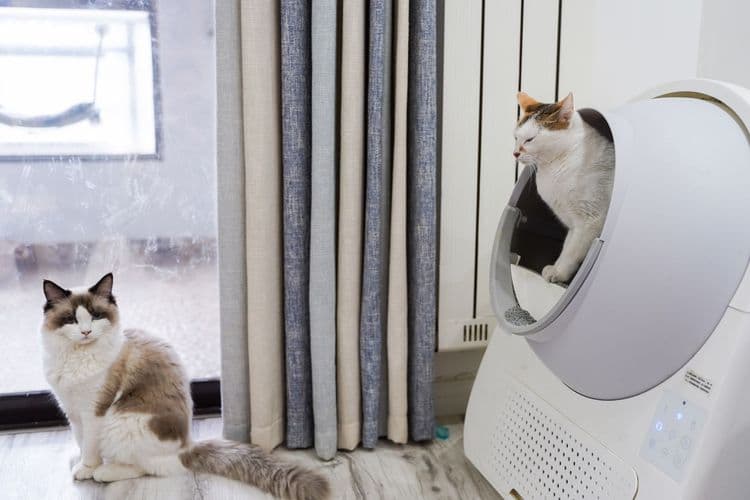
Location and household traffic can change whether a box feels safe. Photo by İrem Dur on Pexels.
Observation log for the next 48 hours
Write down what you see before changing everything. A phone note is enough. The point is to capture the pattern while it is still fresh, not to build a workable medical record.
- Where did the accident happen?
- Was it urine, stool, or both?
- Did the cat try to use the box first?
- Was the box clean at the time?
- Did another pet block the route?
- Did the cat seem tense, painful, rushed, or confused?
- Did anything change recently: litter brand, box location, guests, renovation, baby, schedule, outdoor cats, or new pets?
This small log helps you avoid guessing. It also gives a veterinarian or behavior professional better information if you need help.
Add one more detail if you can: where the cat was right before the accident. A cat who walks to the box, sniffs, then leaves may be reacting to the box itself. A cat who urinates near a window may be responding to an outdoor cat. A senior cat who chooses a rug near the stairs may be avoiding a painful climb.
Box setup problems that cats notice
One box for several cats can create competition or guarding. Add boxes in separate areas so one pet cannot control every route.
Do not punish the evidence
Punishing a cat near a mess rarely teaches the intended lesson. It can teach the cat that people are unpredictable around elimination, which may increase hiding and stress. Cleaning matters more than scolding.
Use an enzymatic cleaner made for pet messes and follow the label. Regular household cleaners may reduce visible stains while leaving scent cues the cat can still detect. Keep the cat away from the cleaned spot until it is dry.
Decision tree: what to try first
-
If the cat shows pain, straining, blood, repeated trips, appetite loss, or major behavior change, call a veterinarian.
-
If the problem started after a litter change, return to the old litter or offer two boxes side by side so the cat can choose.
-
If the accident happens near the box, check cleanliness, box size, entry height, and whether the cat can move comfortably into it.
-
If it happens in one room, look for stress or access issues in that area: doors closing, other pets, loud appliances, outdoor animals near windows, or a box placed too far away.
-
If the home has multiple cats, spread boxes out. Several boxes lined up in one room can still function like one resource.
A cleaning detail that changes behavior
Cleaning is not only about smell for people. It is about removing the cue that tells a cat,“this place has worked before.” Use an enzymatic cleaner made for pet urine or stool, and give it enough contact time according to the label. If a rug pad or cushion underneath is soaked, cleaning only the top layer may not solve the scent problem.
After cleaning, block the spot temporarily or change its purpose. Put a washable mat, furniture, or a food puzzle nearby only if it fits the room. Do not put food directly on a soiled area before it is cleaned well; that can create a different kind of stress.
Do not make the box harder to reach
When people are embarrassed by a litter box, they often move it farther away: basement corner, laundry room, closet, or behind a heavy door. That may look better to humans and worse to a cat. Older cats, anxious cats, and cats in multi-pet homes may avoid a box that requires a long trip through noisy or guarded territory.
If you need to relocate a box, add the new box first and remove the old one later. A sudden move can leave the cat searching for the old bathroom spot.
A practical cleaning map
Clean the accident area as if your cat can still smell what you cannot. Use an enzymatic cleaner made for pet urine and follow the label contact time. A quick wipe may remove visible mess while leaving scent behind. If the cat keeps returning to one corner, block access temporarily after cleaning and add a better litter option nearby.
Avoid ammonia-heavy cleaners around urine spots. The smell can confuse the issue instead of solving it. Strong fragrance can also make the area unpleasant for humans while still failing to remove the scent cue for the cat.
Multi-cat homes need more than one answer
In a multi-cat home, litter box trouble may be a social problem as much as a box problem. One cat may block a hallway. Another may avoid a covered box because it has only one exit. A senior cat may need a lower entry. A nervous cat may need a box away from noisy appliances.
The common starting point is one box per cat, plus one extra, placed in separate areas rather than lined up in one room. That layout gives a cat choices and lowers the chance that one animal controls all access.
Questions to bring to the veterinarian
If the problem is new, write down:
- when the accidents started
- whether urine volume changed
- whether the cat strains, cries, or visits the box repeatedly
- whether stool is normal
- whether food, water, medication, or household stress changed
The Cornell Feline Health Center treats house soiling as a problem with possible medical and behavioral causes, which is why guessing from the mess alone is risky.
Litter changes should be boring
If you need to test a new litter, keep one box with the familiar litter while adding a second option nearby. A sudden full replacement can make the cat avoid every box. Unscented, soft-textured litter is often a safer starting point than strong fragrance or unusual pellets, but the individual cat’s response matters.
Box style matters too. Covered boxes control smell for humans, but some cats dislike the trapped odor, low headroom, or single exit. A senior cat may need a lower entry. A larger cat may need a larger box than the one sold as “standard.”
Do not punish the mess
Scolding, spraying, or carrying the cat to the box after an accident usually adds stress without explaining what went wrong. Clean the area, protect the spot, and make the correct box easier to use. If the cat is avoiding the box because of pain or fear, punishment only makes the home feel less safe.
When behavior needs professional help
Ask a veterinarian or qualified behavior professional for help if the behavior appears suddenly, includes biting or repeated aggression, causes injury, involves panic, happens with pain or appetite changes, or gets worse despite calmer handling. Training works better after pain, fear, and medical causes are considered.
Track the pattern before buying a new box
Write down where the accident happened, what time of day it happened, whether the litter box was clean, and whether anything changed in the home. New pets, visitors, laundry machines, loud construction, different litter, a covered box, or a moved box can all matter.
Also watch for medical warning signs. Straining, frequent trips, crying in the box, blood, licking the urinary area, or sudden house soiling should be discussed with a veterinarian quickly, especially for male cats. A litter box problem is not always a preference problem.
Rule out urgent medical signs first
Do not start by buying a new box if the cat is straining, crying, producing little urine, visiting the box repeatedly, licking the urinary area, passing blood, hiding, vomiting, or acting painful. Male cats in particular can face life-threatening urinary blockage. Call a veterinarian or emergency clinic right away if urination looks difficult or blocked.
Cornell Feline Health Center notes that house soiling may involve medical problems, box aversion, or location preference. That is why the first step is not blame. It is sorting risk.
The litter box audit
Change one variable at a time. If you replace the box, litter, location, and cleaning product together, you will not know what helped.
A seven-day pattern log
Track date, time, location, urine or stool, box condition, recent stress, and any signs of pain. This is useful even if you call a veterinarian. “She peed outside the box twice” is less helpful than “small urine spots near the laundry room at night, after the box was moved beside the washer.”
Clean accidents with an enzymatic cleaner made for pet messes. Avoid ammonia-heavy smells that may keep drawing the cat back to the same spot.
Do not punish the cat
Punishment does not treat urinary pain, arthritis, fear, box aversion, or household stress. It often makes the cat hide the problem. Keep the box easy to reach, add temporary extra boxes if needed, and lower pressure while you investigate.
For related household stress, read introducing a new cat without rushing the first week and indoor cat scratching changes before blaming the sofa.
Red signs before treating it as behavior
A cat who repeatedly enters the box but produces little or no urine, cries in the box, has blood in urine, seems weak, vomits, or hides suddenly needs urgent veterinary care. Urinary blockage can be life-threatening, especially in male cats. Do not wait to see if a new litter fixes those signs.
For less urgent changes, still start with medical screening when the behavior appears suddenly, especially in senior cats or cats with a urinary history.
The right order of troubleshooting
- Rule out pain, urinary disease, constipation, diarrhea, or mobility trouble.
- Check the box count and placement. Use the N+1 rule as a starting point: one box per cat, plus one extra.
- Check box access: low entry for seniors, quiet location, no ambush points.
- Check litter type, cleanliness, covered versus uncovered preference, and recent household stress.
Changing the box first can miss the real problem. The order matters because health issues carry the highest risk.
Kittens, seniors, and multi-cat homes
Kittens need low-entry boxes, usually around 10 cm or lower at the entrance when they are small, and a fine, unscented litter texture they can dig without slipping. Place at least one box close to the kitten’s main room and avoid high shelves, deep tubs, or covered boxes that make entry confusing.
Senior cats may need ramps, low sides, and boxes on every level of the home. Multi-cat homes need boxes spread out, not lined up in one laundry room where one cat can block access.
Avoid punishment, sprays, or dragging a cat to the box. Make the correct box easier and safer to use.
Related reading for the same problem
For nearby behavior routines, compare new cat introductions and sofa scratching changes.
Sort the problem before changing the box
Litter-box problems need sorting before shopping. Separate pain, fear, environment, and habit before changing the box. A cat who urinates beside the box may have a medical problem, a box-location problem, a substrate problem, or stress around another pet.
Do not solve every case by buying a new covered box. First check whether the cat is straining, visiting the box often, crying, licking, or producing little urine. Those signs can be urgent. Then look at number of boxes, cleaning, location, litter type, access, and whether another pet blocks the route.
Source notes and further reading
- Cornell Feline Health Center: Feline lower urinary tract disease
- American Association of Feline Practitioners: Cat friendly homes
- International Cat Care: House soiling


