Check access, storage and escape paths before assuming a familiar room is safe.
- Secure cords, bins and cleaning supplies
- Check plants and small objects
- Plan exits, gates and travel routines
Safety note: This article provides general household pet safety guidance only. It is not veterinary medical advice, diagnosis, poison-control instruction, or emergency treatment guidance. If a pet swallows a toxic item, foreign object, medication, chemical, battery, string, or sharp object, contact a veterinarian or animal poison control right away.
By Best Pet Care Guide Editorial Team
Evening pet care is often rushed because people are tired. The last walk is done quickly, the food bowl is moved to the sink, the lights go out, and small problems wait until morning. Most nights that is harmless. Some nights, a missing water bowl, a loose trash lid, a closed door, or a toy with torn pieces can turn into a problem while everyone is asleep.
A night check does not need to be dramatic. It should be short enough that you will actually do it, but specific enough to catch ordinary household risks. Think of it as a two-minute walk through the pet’s world from their height, not a deep cleaning project.
If this topic is part of a wider home routine, it helps to compare it with a room-by-room evening safety check for curious pets and a room-by-room pet safety reset for busy homes. Those nearby guides cover moments that often overlap with this one.
Start With Food, Water, And Access
Check water first. The bowl should be clean, reachable, and not blocked by a door that might swing shut. In multi-pet homes, one animal may guard a bowl in ways people miss during the day. If you have more than one pet, a second water station away from the main traffic path is often easier than trying to supervise every drink.
Food is different. Some pets do fine with a small planned bedtime snack. Others should not have open access to food because of weight management, medical diets, house training, or conflicts with another pet. The important part is not one universal rule. The important part is that the evening setup matches the plan your household and veterinarian are using.
If your pet uses medication, do a quiet check that pills, liquids, and medicated treats are closed and out of reach. Many emergency calls begin with a pet finding something that was left on a counter for only a moment.
Read The Bathroom Clues
For cats, scoop or at least inspect the litter box before bed. You are not only reducing odor. You are checking whether the cat has urinated, whether stool looks unusual, and whether there are signs of straining or accidents nearby. A cat visiting the box repeatedly without normal urine is not a wait-and-see situation.
For dogs, notice the final bathroom trip. Did the dog urinate normally? Did they ask to go out again immediately? Did stool look unusually loose? One odd evening does not explain everything, but a note can help if the pattern continues. The American Veterinary Medical Association’s general pet care resources at avma.org are useful background, but individual changes still belong in a conversation with your veterinarian.
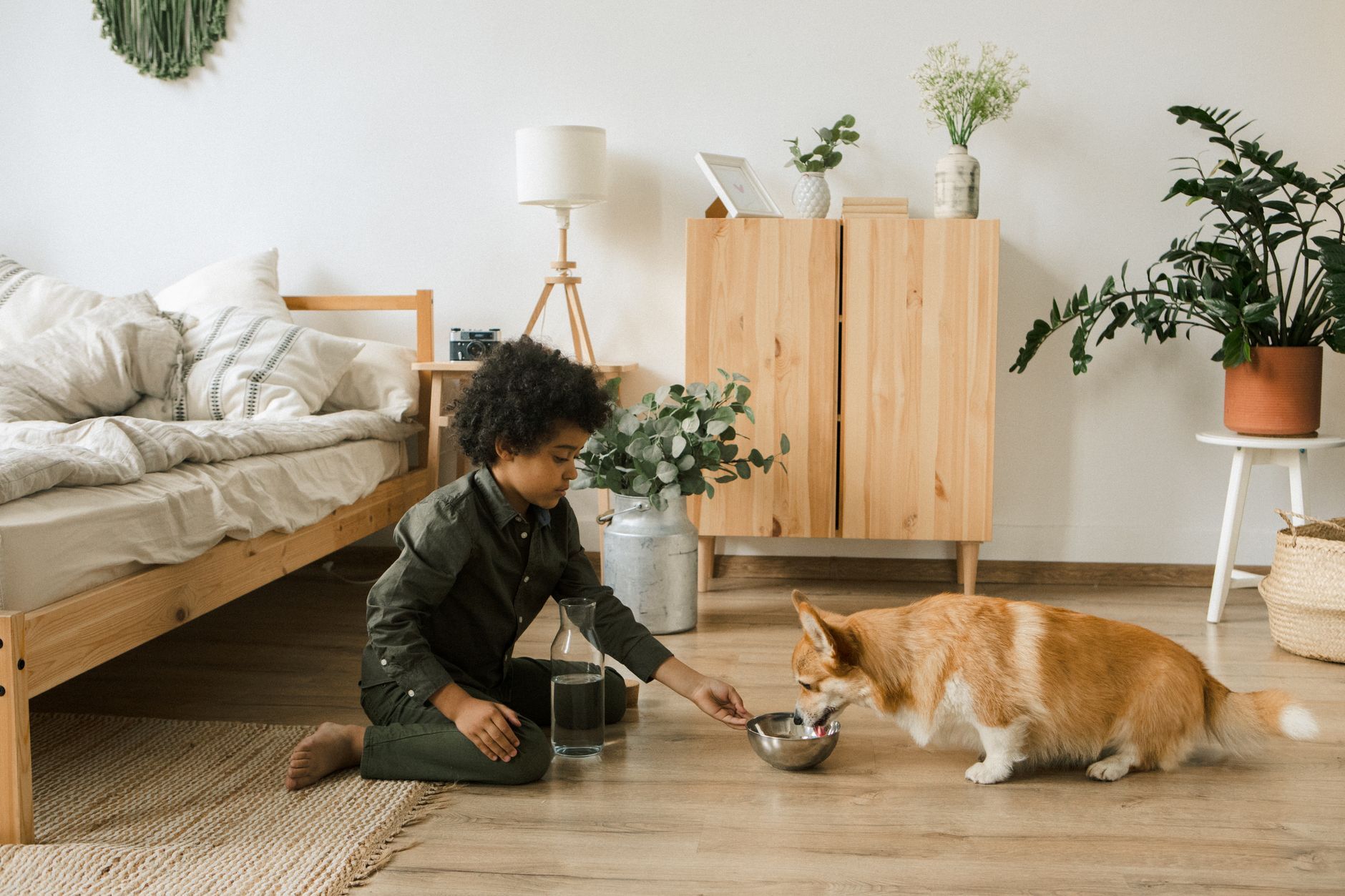
Child feeding a Corgi water in a cozy bedroom with plants and natural decor. Photo by KATRIN BOLOVTSOVA on Pexels.
Look For Small Objects At Pet Level
Walk through the rooms your pet can access and look lower than you usually do. Hair ties, twist ties, dropped pills, batteries, dental floss, food wrappers, torn toy stuffing, and small plastic pieces are easy to ignore from standing height. They become more interesting to a bored pet at 1 a.m.
The goal is not to make the home sterile. It is to remove the few objects that could cause an obvious problem if chewed or swallowed. Put trash behind a closed door, move bags with food smells, and take damaged toys out of rotation until you can inspect them in daylight.
Temperature And Resting Spots Matter
A pet’s favorite sleeping spot may change with weather. In summer, check that the room is not trapping heat. In winter, check that a pet bed is not pressed against a heater, fireplace, or drafty door. Older pets, flat-faced pets, very young animals, and pets with medical conditions may be less flexible about temperature than a healthy adult animal.
If a pet has mobility trouble, make the path to water and the bathroom area simple. A senior dog should not have to cross a slippery floor in the dark. A cat should not have to jump down from a high perch to reach the litter box if stiffness is getting worse.
A Useful Two-Minute Checklist
Use this short order if you want a repeatable routine:
-
Water bowl reachable and clean.
-
Food, treats, and medications put away.
-
Litter box or final bathroom trip checked.
-
Trash, bags, cords, and small objects out of reach.
-
Doors and gates set the way you intend.
-
Damaged toys removed.
-
Bed, crate, or favorite resting spot comfortable.
-
Any unusual behavior written down.
Writing down odd behavior is underrated. A pet who skipped dinner, drank much more, paced, coughed, hid, or seemed restless may look normal again by morning. A simple note helps you decide whether the event was isolated or part of a pattern.
What To Avoid Turning Into A Ritual
Do not use the night check as an excuse to wake a sleeping pet repeatedly, force affection, start grooming, or inspect every inch of the body unless there is a real concern. A calm routine should reduce stress, not create a bedtime performance.
Also avoid changing too many things at once. If a pet suddenly sleeps poorly, ask what changed: a new bed, a new room, a late meal, house guests, weather, fireworks, a different walk time, or a new medication. One change is easier to understand than five changes made on the same evening.
When The Night Check Finds Something
If you find torn toy pieces and cannot account for them, watch closely and call your veterinarian for guidance, especially if vomiting, appetite loss, pain, or lethargy follows. If you see blood in urine, repeated straining, severe diarrhea, collapse, breathing difficulty, or suspected toxin exposure, seek urgent advice.
If the issue is ordinary, such as an empty bowl or a blocked litter box, fix it and make tomorrow easier. Move the water station. Add a night light. Put a bin with safe toys near the room where your pet settles. Small system changes work better than blaming yourself every evening.
Adjust The Check For Different Pets
A young dog may need the evening routine to focus on bathroom timing, chewing risks, and whether the crate or sleeping area feels calm. A senior dog may need a non-slip route, a lower bed, easier access to water, and a final check for stiffness after getting up. A confident adult cat may simply need clean water and a usable litter box, while a nervous cat may need the door left open to a familiar room rather than being moved to a new space overnight.
The routine should also change when the household changes. Guests, holiday decorations, school bags, craft supplies, delivery boxes, and new plants can introduce risks that were not there last week. A pet who ignores ordinary furniture may still investigate a ribbon, a food wrapper, or a suitcase that smells like another home.
Make It Easy For The Whole Household
A night check works better when it is shared rather than carried by one tired person. Keep the checklist short and visible. One person can handle the water and food area, another can check doors and trash, and a child can report whether a favorite toy is torn without being responsible for medical judgment.
If someone in the home tends to forget, attach the habit to something that already happens: locking the back door, turning off the kitchen light, or setting the coffee maker. The routine should feel like closing the house for the night, not like a separate pet chore that competes with bedtime.
The Point Is Predictability
Pets live inside human routines. They cannot open every door, read every label, or explain that the water bowl is behind a baby gate. A simple night check gives them a safer end to the day and gives you better information when something changes. Done well, it is not fussy. It is just a quiet habit that prevents avoidable surprises.
A two-minute route through the house
Start where the pet eats, then move to the sleeping area, favorite window, hallway, and door. Pick up food wrappers, check that water is available, remove broken toy pieces, and make sure doors or gates are set the way you expect. If your pet uses a litter box, glance at whether it is accessible and not blocked by laundry or a closed door.
This is not meant to become a stressful inspection. It is a small routine that prevents avoidable surprises after everyone is tired.
What changes the checklist
Change the night check when the household changes. Guests, new furniture, storms, fireworks, new pets, a recovering animal, or a puppy in the house all create different risks. A senior dog may need a night light and traction. A cat may need a quieter litter box route. A young dog may need cords and shoes lifted before bedtime.
The best night check is specific to your home. If you keep finding the same problem, such as a chewed toy under the sofa or a blocked water bowl, change the setup rather than rediscovering it each night.
Keep the night check small
The night check should take two to five minutes. Food away, water available, doors closed, litter path clear, toys safe, cords lifted, and sleeping area accessible. If the routine takes half an hour, people will skip it when tired.
The goal is not a workable home. It is removing the risks most likely to cause trouble after everyone stops paying attention.
Different night checks for different pets
A puppy night check focuses on bathroom timing, chew hazards, and safe confinement. A senior dog may need traction, a night light, and a clear path to water. A cat may need litter access, window security, and no string or ribbon left out.
Change the checklist when the pet changes. Growth, age, illness, guests, storms, and new furniture can all shift the risk.
When the night check finds a pattern
If the same issue appears repeatedly, fix the room rather than relying on memory. Move the charger, add a lidded bin, block the laundry room, or change the toy basket. A good night routine gets shorter over time because the home setup improves.
Related reading for the same problem
For nearby home-safety routines, compare the after-work pet safety reset and the multi-pet home safety system.
Keep this as the sleep-time check
This article should focus on risks that matter when people stop watching: heating appliances, space heaters, candles, open windows, curtain cords, water bowls near cords, blocked litter access, unsafe toys, and pets trapped in closets, laundry rooms, or guest rooms. It should not repeat the after-work reset or full-home safety system.
Aim for two to three minutes. A checklist that is too long will be skipped when people are tired.
Dog and cat night priorities
For cats, check litter access, window security, no string or ribbon left out, and no tempting climb to an unsafe shelf. For dogs, check door latches, trash, bathroom timing, chew items, and where leashes or shoes are stored. For seniors, add traction, a night light, easy water access, and a nearby bathroom or litter path.
If a pet repeatedly unsettles at night, record the pattern rather than adding more random steps.
Night abnormal signs
Mild restlessness that settles can be watched. Repeated vomiting, breathing trouble, collapse, inability to urinate, severe pain, repeated attempts to defecate without success, or suspected toxin ingestion needs urgent veterinary help. Night checks reduce preventable risks, but they do not replace emergency care.
Two-minute sleep-time checklist
Related reading for the same problem
For nearby home-safety routines, compare the after-work safety reset and the multi-pet home safety system.
Source notes and further reading
- ASPCA Animal Poison Control Center: Animal poison-control guidance
- FDA: Potentially dangerous items for your pet
- AVMA: First aid tips for pet owners


