Check access, storage and escape paths before assuming a familiar room is safe.
- Secure cords, bins and cleaning supplies
- Check plants and small objects
- Plan exits, gates and travel routines
Safety note: This article provides general household pet safety guidance only. It is not veterinary medical advice, diagnosis, poison-control instruction, or emergency treatment guidance. If a pet swallows a toxic item, foreign object, medication, chemical, battery, string, or sharp object, contact a veterinarian or animal poison control right away.
A guest room can look harmless to people and still be confusing for a pet. There may be loose cords behind the bed, a half-open closet, a scented candle on a low shelf, pills in a travel bag, a plant on the windowsill, or a door that does not latch well. Overnight stays make the problem sharper because everyone is tired and routines are already changed.
This guide is informational only and cannot diagnose a pet. Sudden behavior changes, pain signs, repeated vomiting, collapse, breathing trouble, urinary difficulty, suspected poisoning, or a swollen abdomen need prompt veterinary help. For general pet-owner safety references, see the AVMA pet care resources at https://www.avma.org/resources-tools/pet-owners/petcare and the FDA household hazard list at https://www.fda.gov/animal-veterinary/animal-health-literacy/potentially-dangerous-items-your-pet.
For a connected next step, read a room-by-room evening safety check for curious pets and a room-by-room pet safety reset for busy homes. They give more detail on the household routines that usually sit beside this decision.
The five-minute first sweep
Before bringing the pet into the room, stand at the doorway and look low. Pets do not inspect a room from adult eye level. They see the underside of furniture, dangling fabric, dropped tablets, charging cables, and the interesting gap behind a nightstand.
Move medications, vitamins, nicotine products, cannabis products, cosmetics, cleaning wipes, sewing kits, coins, batteries, and snack bags into a closed cabinet outside the room. A zipped suitcase is not a pet-proof container. Many dogs can nose one open, and some cats can work a zipper enough to reach the contents.
Quick checklist
- Cords are unplugged or routed behind furniture where chewing is unlikely.
- Windows are locked or opened only with secure screens.
- Plants are identified and removed if you are unsure they are pet-safe.
- Trash cans are empty or lidded.
- Guest bags are off the floor and behind a closed door.
- Small objects such as hair ties, earplugs, buttons, and toy parts are picked up.
- The pet has water, bedding, and a known safe chew or toy.
- The door closes firmly and cannot be pushed open easily.
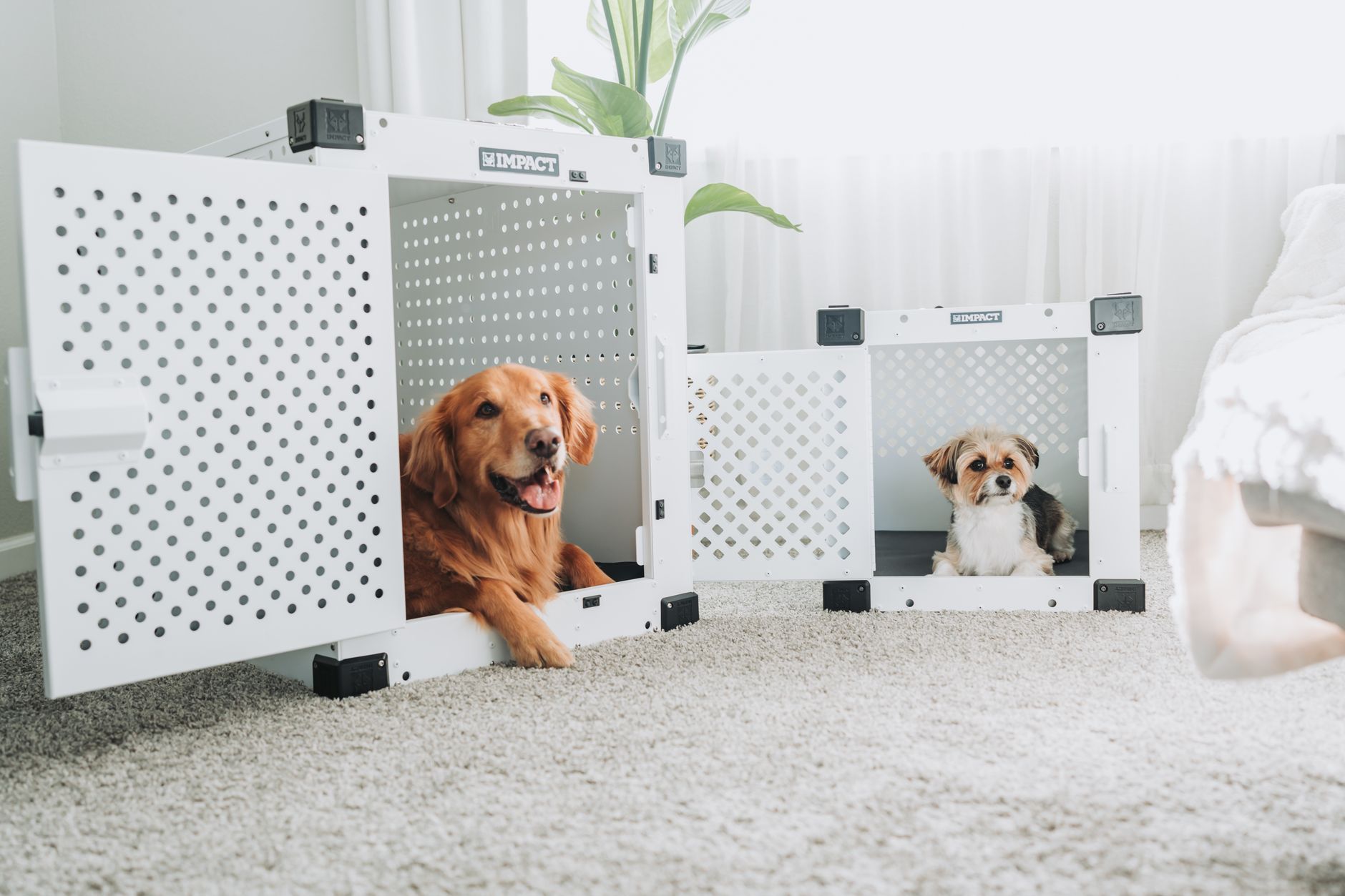
Golden Retriever and small dog resting in white dog crates in a cozy living room. Photo by Impact Dog Crates on Pexels.
Plants deserve extra caution
Lilies are especially dangerous for cats. Many attractive houseplants can also irritate the mouth or stomach. The ASPCA maintains a searchable plant database that is useful when you do not know what is on the windowsill: https://www.aspca.org/pet-care/animal-poison-control/toxic-and-non-toxic-plants.
If you cannot identify a plant, remove it from the room. Do not rely on placing it up high. Cats climb. Dogs knock tables. A guest room is not the place to test whether a pet is interested in leaves.
Think about escape routes
Temporary rooms often have unusual door habits. A latch may stick. A child may open the door without looking. A cat may hide under the bed and bolt when someone reaches in. A dog may rush the hallway because the room smells unfamiliar.
Use a baby gate only if it is appropriate for the pet and cannot be jumped, climbed, or pushed over. For some dogs, a crate or pen is safer. For many cats, the safer choice is a closed room with a sign on the door and a litter box placed away from food and water.
Set up the room before bedtime
Night is when small flaws become bigger. The water bowl is in the dark. The dog hears a noise and paws at the door. The cat hides behind a dresser. Someone half-asleep opens the door and the pet slips into a hallway.
Do the setup while people are still awake. Show guests where the pet is sleeping. Put the leash, carrier, or treats in one visible place. If the pet uses medication or a special diet, keep it in a labeled container away from guest food. Do not ask visitors to improvise unless they already know the pet well.
Short scenario: the holiday suitcase problem
A common overnight risk is the visiting relative’s bag. It may contain pain relievers, sugar-free gum, chocolate, sleep aids, or a snack bag that smells like meat. The bag sits on the guest bed during the afternoon and lands on the floor at night. The pet investigates after everyone is asleep.
The fix is not awkward. Make a house rule: all guest bags go in the closet with the door fully closed, or in a room the pet cannot enter. It sounds fussy once. It prevents a late-night emergency.
Comfort matters too
Safety is not only about removing hazards. A pet who feels trapped or overstimulated may scratch doors, chew bedding, bark, or stop using the litter box. Bring familiar bedding if possible. Keep the room temperature comfortable. Use a dim light for senior pets who navigate poorly in darkness.
Dogs may need one last calm bathroom break before the room closes for the night. Cats need litter that feels familiar, placed where they do not have to pass food or water. If a pet has never slept alone, do a short practice session earlier in the evening rather than discovering the problem at midnight.
When to skip the guest room plan
A guest room is not the right setup for every pet. Skip it if the pet panics when confined, has a medical condition that requires close monitoring, is likely to chew doors or walls, or has a known history of escaping. In those cases, use a supervised area, an appropriate crate or pen, or another plan recommended by your veterinarian or trainer.
The best temporary room is boring in the right way: no hazards, no mystery snacks, no escape drama, and enough familiar comfort that the pet can rest. Check low, remove what you cannot supervise, and make the overnight plan clear to every person in the house.
Food and fragrance are easy to miss
Guest rooms often collect scented products: diffusers, sprays, lotions, essential oils, candles, and laundry beads. Some pets ignore them. Others lick, chew, or knock them over. Cats can be especially sensitive to certain essential oils, and birds are vulnerable to airborne irritants. If you are not sure a product is safe for the species staying in the room, remove it.
Food is similar. A wrapped protein bar in a backpack may smell more interesting to a dog than a full bowl of kibble. Sugar-free gum can contain xylitol, which is dangerous for dogs. Chocolate, raisins, grapes, alcohol, and some nuts are also poor risks in a sleeping space. The safest guest-room rule is simple: no unattended human food where a pet can reach it.
Make the room easy to inspect later
A safer room is also one you can inspect quickly. Pull the bed a few inches from the wall only if that does not create a hiding trap. Close drawers fully. Keep the floor clear enough that you can see whether the pet ate, vomited, knocked something over, or avoided the litter box. Clutter turns small clues into mysteries.
If the pet is a cat, block unsafe gaps behind appliances or heavy furniture before the cat enters. Do not wait until a nervous cat has already wedged itself behind a dresser. If the pet is a dog, remove decorative pillows or blankets that invite chewing. Temporary spaces work best when they are plain.
After the overnight stay
In the morning, check the room before letting normal household traffic resume. Look for chewed corners, missing objects, spilled water, scratched doors, urine spots, loose stool, or signs that the pet never rested. These details help you decide whether the setup is safe for a second night.
If the pet seemed stressed, adjust the plan before the next stay. That may mean a different room, a crate that the pet already knows, a quieter schedule, or professional advice. Overnight safety is not proven by one lucky night. It is proven by repeatable conditions that still work when people are tired.
Food and fragrance are easy to miss
Guest rooms often collect scented products: diffusers, sprays, lotions, essential oils, candles, and laundry beads. Some pets ignore them. Others lick, chew, or knock them over. Cats can be especially sensitive to certain essential oils, and birds are vulnerable to airborne irritants. If you are not sure a product is safe for the species staying in the room, remove it.
Food is similar. A wrapped protein bar in a backpack may smell more interesting to a dog than a full bowl of kibble. Sugar-free gum can contain xylitol, which is dangerous for dogs. Chocolate, raisins, grapes, alcohol, and some nuts are also poor risks in a sleeping space. The safest guest-room rule is simple: no unattended human food where a pet can reach it.
Make the room easy to inspect later
A safer room is also one you can inspect quickly. Close drawers fully. Keep the floor clear enough that you can see whether the pet ate, vomited, knocked something over, or avoided the litter box. Clutter turns small clues into mysteries.
If the pet is a cat, block unsafe gaps behind heavy furniture before the cat enters. Do not wait until a nervous cat has already wedged itself behind a dresser. If the pet is a dog, remove decorative pillows or blankets that invite chewing. Temporary spaces work best when they are plain.
Guest rooms hide unfamiliar hazards
A guest room may look tidy to people and still be risky for pets. Bags may contain gum, medicine, snacks, cosmetics, sewing kits, earbuds, chargers, or fragrance products. Under the bed may hold dropped pills, hair ties, dust, or old packaging. A nightstand may have lotions, candles, or essential oils.
Check the room at pet height. If a small dog, puppy, or cat can reach it, assume it may be investigated.
A species-specific room check
For dogs, focus on food smells, trash, bags, shoes, cords, and small objects. For cats, check string, ribbon, blinds, open windows, fragile decor, and hiding gaps. For senior pets, add traction, water access, and a clear path to the door or litter box.
One room can be safe for a calm adult dog and wrong for a kitten. Match the room to the animal staying there.
Overnight monitoring without hovering
Before lights out, confirm water, bathroom access, bedding, room temperature, and safe exits. In the morning, check whether the pet ate, drank, used the litter box or went outside normally, vomited, damaged anything, or hid unusually. These are not dramatic checks. They are the clues that tell you whether the room worked.
Related reading for the same problem
For nearby home-safety routines, compare the after-work pet safety reset, the multi-pet home safety system, and the simple night check before pets settle down.
Short stay or longer boarding
For one or two nights, focus on bags, medication, snacks, cords, windows, trash, and safe bedding. For longer stays, add a feeding station, cleaning routine, emergency contacts, comfort items, and a plan for exercise or litter maintenance.
Dogs need floor-level checks for food smells, trash, shoes, and small objects. Cats need vertical checks: blinds, cords, window screens, shelves, plants, and hiding gaps.
Hidden guest-room hazards
Check curtain cords, loose blinds, narrow furniture gaps, open suitcases, toiletries, essential oils, pills, sewing kits, earbuds, chargers, gum, and snacks. Close windows or confirm screens are secure. Block spaces where a frightened pet could wedge behind furniture.
Guest rooms often contain objects the household forgets about because people do not use the room every day.
Overnight emergency kit
Keep the pet’s food, medication instructions, leash or carrier, waste bags, cleaning supplies, emergency clinic number, and owner contact in one place. For cats, include litter supplies and a carrier that is easy to access. For dogs, include leash rules and door rules.
A room check lowers risk, but it does not replace supervision or a plan for sudden illness, escape, or ingestion.
Related reading for the same problem
For nearby home-safety routines, compare the after-work safety reset, the multi-pet home safety system, and the simple night check.
Source notes and further reading
- ASPCA Animal Poison Control Center: Animal poison-control guidance
- FDA: Potentially dangerous items for your pet
- AVMA: First aid tips for pet owners


