
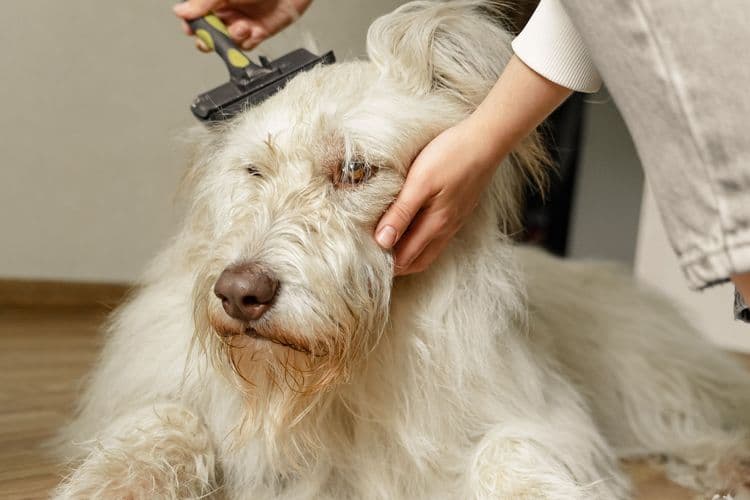
Start with the smallest routine that the pet and household can handle consistently.
- Keep sessions short and predictable
- Watch comfort and stress signals
- Escalate grooming or health concerns to a pro
Safety note: This article provides general household pet safety guidance only. It is not veterinary medical advice, diagnosis, poison-control instruction, or emergency treatment guidance. If a pet swallows a toxic item, foreign object, medication, chemical, battery, string, or sharp object, contact a veterinarian or animal poison control right away.
A weekly grooming check works best when it feels like a familiar care routine, not a rare wrestling match. Many dogs and cats cope better with short, predictable handling sessions than with long sessions that happen only after mats, dirty ears, overgrown nails, or skin changes have become obvious. Aim to notice comfort, coat, paws, nails, ears, teeth, and skin while the problem is still small enough to discuss calmly.
This routine also connects with how to build a grooming routine your pet can actually tolerate and pet dental care without turning tooth brushing into a fight, especially if you are making several small changes without overwhelming your pet.
Start With a Low-Stress Grooming Check
A weekly grooming check should be short enough to repeat. For many households, ten calm minutes are more useful than one workable hour that everyone dreads. Choose one quiet place with good light, a non-slip surface, and the tools you actually need: brush or comb, towel, treats, nail file or clippers if appropriate, ear-safe wipes only if recommended, and a notebook or phone note.
Do not begin with the hardest body part. If your dog hates paw handling or your cat dislikes the tail area, start with easy touches and stop before frustration builds. Trust grows when the pet learns that grooming does not always mean restraint.
The three-pass routine
Use three passes instead of one long inspection.
- Look without touching: posture, coat, gait, eyes, ears, scratching, licking, and any new smell.
- Touch gently: shoulders, back, sides, legs, paws, tail area, and around the collar or harness line.
- Do one small task: brush a section, trim one nail, clean a small stain, or separate a minor tangle.
This order matters because it helps you notice pain signals before you handle the sensitive spot. A pet who stiffens when walking, guards a paw, or turns sharply when the ear is approached may need help rather than more persistence.
A neatly arranged manicure toolkit with cuticle nipper and nail files on a soft blue towel, ideal for salons. Photo by Justyna Grochowska on Pexels.
Coat and skin: look for patterns
Brush in the direction the coat naturally lies and pause when you find tangles. Pulling through mats can hurt, and tight mats can hide skin irritation. Long-haired pets may need more frequent checks behind ears, under collars, armpits, belly, and back legs. Short-haired pets still need skin checks, especially if they scratch, lick, or develop bumps.
Watch for fleas, flea dirt, redness, scabs, dandruff, bald spots, greasy patches, or a sour smell. The pattern is useful. One itchy ear means something different from whole-body itching. A single pressure spot under a harness tells a different story from widespread hair loss.
Paws and nails: make the floor part of the check
Before touching paws, listen to how your pet moves on hard flooring. Nails that click loudly may need attention, although ideal length varies by species, breed, age, and foot shape. Check between toes for burrs, compacted litter, ice melt residue, grass seeds, cuts, or irritation. In winter and after city walks, wipe paws gently if roads have been treated.
If nail trimming is stressful, reduce the job. Touch the paw and reward. Next time, touch the clipper to one nail and reward. Later, trim a tiny amount from one nail. For dark nails, nervous pets, or previous bleeding, a professional groomer or veterinary team may be safer than forcing it at home.
Check Ears, Eyes, and Mouth Without Forcing It
Ears should not smell strongly, look very red, or contain heavy discharge. Do not push cotton swabs deep into the ear canal. If your pet shakes the head, scratches ears, cries, tilts the head, or resists ear contact, ask a veterinarian before cleaning aggressively.
For eyes, note squinting, discharge, cloudiness, swelling, or pawing. For the mouth, look at breath, chewing comfort, drooling, gum color, broken teeth, and whether the pet avoids hard food. Dental problems are common enough that AAHA encourages routine dental attention, but a home check is not a diagnosis. It is a way to notice changes early enough to ask for help.
Common mistake: brushing only where it is easy
Many pets enjoy brushing along the back but form tangles where the brush rarely goes. The collar line, chest, armpits, trousers, tail base, and behind the ears deserve small, patient checks. Use your fingers first so you do not drag a comb through a tight knot.
If a mat is close to the skin, do not cut it blindly with scissors. Skin can fold into mats, and accidental cuts happen quickly. Use a professional groomer or veterinary team when mats are tight, widespread, painful, or near sensitive areas.
A weekly grooming log
The log does not need to be elaborate. It prevents the household from forgetting when a change started. That timing can be useful if you later call a clinic.
Grooming tools should fit the coat, not the trend
A tool that works for one pet may be wrong for another. Fine combs, slicker brushes, rubber curry tools, deshedding tools, nail grinders, and clippers all have different uses. Ask a groomer or veterinary team what suits your pet’s coat and skin. Overusing harsh tools can irritate skin or break coat.
Avoid heavily scented sprays, human shampoos, and online hacks that promise quick fixes without considering the animal. If bathing is needed, use products intended for pets and follow veterinary guidance for skin conditions.
When to stop the session
Stop when the pet freezes, growls, hisses, pants heavily, hides, snaps, trembles, or repeatedly tries to leave. These are not signs of stubbornness. They are information. Shorten the task, change the setup, or ask for professional help.
Children should not be responsible for difficult grooming. They can help gather towels, read the checklist, or give treats under supervision, but an adult should manage body handling and safety.
Build a routine that respects the animal
A useful grooming check leaves the pet calmer at the end than at the start. Pair handling with predictable rewards, use the same quiet surface, and keep sessions brief. Over time, the routine becomes less about forcing care and more about reading the animal’s body.
Weekly grooming is not vanity. It is a practical health-adjacent habit that helps you notice discomfort, equipment rubs, skin changes, and mobility changes while they are still small enough to discuss clearly.
Match grooming timing to energy, not convenience alone
A session that works on Sunday afternoon may fail on a rushed weekday morning. Choose a time when the pet is neither frantic nor deeply asleep. After a walk, after play, or during a quiet evening may work for some animals. Others are more patient before meals because tiny treats are more interesting. Keep notes on timing because the right schedule can reduce resistance without changing any tool.
For cats, consider location carefully. A slippery counter, loud laundry room, or place associated with medication may create tension before grooming starts. For dogs, avoid beginning immediately after door excitement or rough play. The setup should make stillness easy.
When a Professional Groomer Adds Value
Professional grooming is not only about appearance. Groomers are often skilled at coat handling, safe restraint, tool choice, and spotting changes that owners may miss. They still cannot diagnose medical problems, but they can tell you when a skin patch, ear odor, mat pattern, or nail issue deserves veterinary attention.
If you use a groomer, share useful information: old injuries, sensitive paws, anxiety triggers, bite history, allergies, and what handling your pet already accepts. Honest information protects everyone. A calm weekly home check then becomes the bridge between appointments rather than a replacement for care your pet needs.
Use Choice-Based Handling Where Possible
Pets cannot sign consent forms, but they can show whether handling is becoming too much. Offer a pause after a few strokes. Let the pet step away when the task is not urgent. Teach a mat, chin rest, or station behavior if the animal enjoys training. These small choices reduce the feeling that grooming only happens through capture.
For necessary care, safety still matters. A painful mat, broken nail, or medical cleaning may need professional handling. But for ordinary weekly checks, giving the pet predictable starts and stops builds cooperation over time. The animal learns that stillness makes the session shorter, not longer.
Separate grooming from inspection notes
It helps to think of the weekly routine as two jobs: noticing and doing. Noticing may reveal a sensitive ear, new lump, or paw irritation. Doing may be brushing, nail care, or cleaning a small stain. If noticing reveals discomfort, stop the doing part and record what you saw.
This prevents the common spiral where an owner finds a problem and immediately tries to fix it with the wrong tool. Some findings need a phone call, appointment, or professional groomer, not a longer home session.
Seasonal Grooming Risks Worth Logging
Seasonal details make the weekly check more useful and more original to your household. In winter, look for irritation after salt-treated sidewalks, grit, ice melt, wet coats, and damp bedding. In spring and summer, check for grass seeds, burrs, ticks where relevant, pollen-related licking, and mats that form after swimming or rain. In autumn, watch for mud packed between toes and collars that stay damp under thicker coats.
Use a short seasonal note rather than a long diagnosis. For example: “right front paw red after salted pavement”, “small burrs behind both ears after park walk”, or “collar line damp after raincoat use.” These observations help a groomer or veterinarian understand timing if a problem continues.
A More Useful Nail-Care Mini Routine
For pets who dislike nail care, split the task into tiny sessions:
- Touch the shoulder or leg, reward, and stop.
- Touch one paw briefly, reward, and stop.
- Let the clipper or grinder appear without using it.
- Touch the tool to one nail without cutting.
- Trim or file one small tip only if the pet stays relaxed.
This approach is slower at first, but it avoids turning nail care into a household battle. If nails are curling, splitting, bleeding, or already painful, skip the training experiment and ask a veterinarian or groomer for help.
What Makes This Check Different From a Bath Day
A bath day is about cleaning. A grooming check is about noticing. You may not bathe the pet at all. You might simply brush one section, inspect the paws, record a new lump, and stop. That distinction keeps the session light enough to repeat every week.
A repeating check also gives you a baseline. You learn what your pet’s normal coat smell, paw texture, ear appearance, and handling tolerance look like. When something changes, you are comparing it with a real pattern rather than a memory from months ago.
The weekly check is not a full grooming session
A weekly grooming check should find problems early: mats, burrs, broken nails, ear odor, skin redness, lumps, dental changes, and sore spots. It does not need to finish every grooming task. Short checks build trust better than long battles.
Stop while the pet can still recover calmly. That stopping point is part of the training.
A body map for the check
Move in the same order each week: head, ears, mouth glance, shoulders, back, belly if tolerated, legs, paws, tail area, and coat. Keep notes only for changes. “Right ear red” or “left rear paw sensitive” is enough.
Use non-slip footing and good light. Many pets resist because the surface feels unstable, not because they object to grooming itself.
When to use a groomer or veterinarian
Use a professional for severe mats, painful areas, skin infection signs, bleeding, swelling, strong odor, sudden sensitivity, or a pet who cannot be handled safely. Home checks are for noticing and maintaining, not forcing care through pain.
Related reading for the same problem
For nearby daily-care routines, compare the grooming routine your pet can tolerate, pet dental care without forcing brushing, and how to notice pet pain without guessing from one symptom.
Weekly check positioning
This article is the weekly inspection, not the beginner grooming routine. Keep it focused on noticing changes: coat, paws, nails, ears, mouth, skin, lumps, odor, and pain response. If the pet cannot tolerate handling yet, return to the beginner grooming routine before trying a full weekly map.
Normal and abnormal weekly findings
Use one short note per week. Long notes make the habit harder to keep.
Dog and cat details
For cats, add paw-pad checks, overgrooming spots, and hairball patterns. For dogs, add pad wear, nail length, and tail-area changes. Stop if the pet becomes painful or unsafe to handle. A groomer can help with coat maintenance; a veterinarian should see pain, infection signs, wounds, swelling, or sudden sensitivity.
Weekly grooming check record
Keep the record short enough to repeat. The purpose is change tracking, not diagnosing skin, ear, or mouth disease at home.
Related reading for the same problem
For nearby daily-care routines, compare the beginner grooming routine and pain observation without guessing.
Source notes and further reading
- AVMA: Pet care resources
- ASPCA: Dog grooming tips
- Cornell Feline Health Center: Cat health topics


