Use life stage, body condition and veterinary guidance before trusting package claims.
- Match food to life stage
- Measure treats and extras
- Ask a veterinarian about medical diets
Safety note: This article provides general pet nutrition education only. It is not veterinary medical advice, diagnosis, treatment, or a diet prescription. Contact a veterinarian before changing food for puppies, seniors, pregnant pets, pets with chronic disease, or pets with vomiting, diarrhea, weight loss, refusal to eat, or suspected toxin exposure.
Changing how a pet eats sounds simple until the household tries it. One person adds extra treats because the dog looks hungry. Someone else changes breakfast time on workdays. A cat refuses a new bowl. A puppy eats too fast. The routine becomes a collection of guesses, and then it is hard to know whether the food, timing, portion, stress, or household behavior caused the change.
This article is for general home organization only. It does not diagnose weight problems, allergies, digestive disease, urinary issues, or appetite changes. If your pet stops eating, loses weight, vomits repeatedly, has diarrhea, drinks far more than usual, or seems painful, contact a veterinarian. For general background, the <a href=“https://www.fda.gov/animal-veterinary/animal-food-feeds/pet-food”>FDA pet food page</a> explains how pet food is regulated in the United States, while veterinary teams can interpret what applies to an individual animal.
This routine also connects with how to switch pet food without turning dinner into a stomach problem and how to read a pet food label without chasing marketing claims, especially if you are making several small changes without overwhelming your pet.
Begin with a seven-day feeding log
Before changing anything, write down what is already happening for one week. Record the time food is offered, the measured amount, the brand or recipe, treats, chews, table scraps, appetite, stool changes, water intake, and any vomiting or hairballs. Keep the notes boring and factual. “Ate half of breakfast at 7:15, finished the rest at 9:00” is more useful than “didn’t like food.”
A short log prevents the most common mistake: changing several variables at once. If you alter the food, bowl, treat amount, and feeding time in the same week, you lose the ability to learn from the result. Pick one primary change and keep everything else steady for long enough to observe a pattern.
Decide what problem the routine should solve
A feeding routine can solve different problems. It might reduce begging, create a predictable schedule, separate pets during meals, slow down fast eating, make medication easier, or help the household stop overusing treats. Write the purpose in one sentence. If the purpose is unclear, the plan will drift.
For example, “make dinner calmer for two cats” leads to different choices than “help a dog stop gulping food.” The first may require separate rooms and predictable timing. The second may call for a slow feeder, smaller meals, or veterinary advice if gulping is new or paired with discomfort. The goal decides the method.
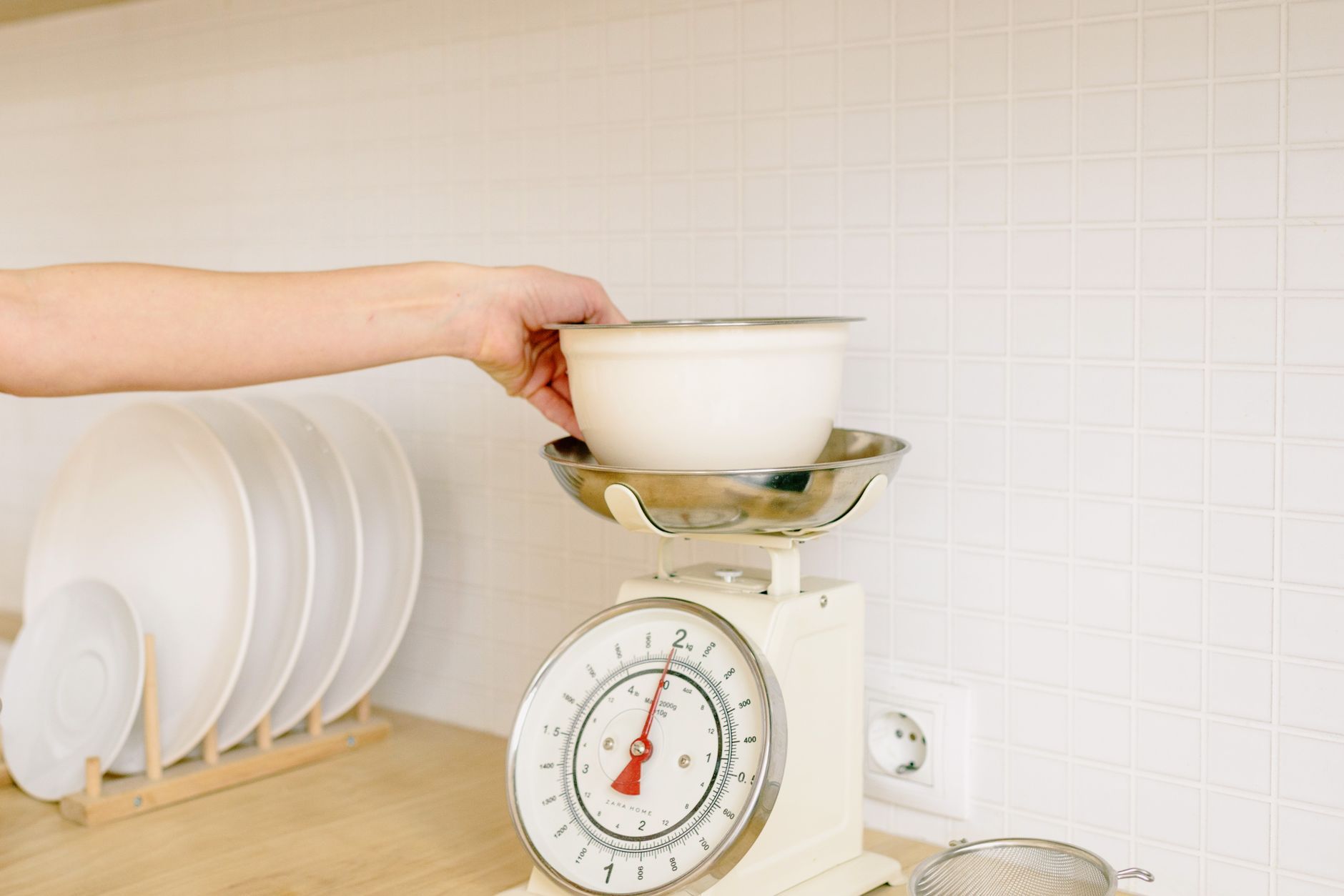
Close-up of hand placing a bowl on a kitchen weighing scale for food preparation. Photo by Ksenia Chernaya on Pexels.
Change one feeding lever at a time
The main levers are timing, portion, food type, bowl setup, location, and treat rules. Change only one lever for several days unless your veterinarian has given a different plan. This makes the result easier to understand.
Use a numbered approach:
- Keep the current food and bowl while changing meal time.
- Keep the time and bowl steady while adjusting measured portions.
- Keep portions steady while testing a new bowl or feeding location.
- Change food type only with label guidance or veterinary direction, especially for pets with sensitive stomachs.
Timing changes are often easiest. Move a meal by fifteen to thirty minutes every few days rather than jumping by several hours. Portion changes should be measured with a standard U.S. measuring cup, a gram scale, or the tool your veterinary team recommends, not a scoop that varies each time.
Human foods deserve caution. Some common foods are unsafe for dogs or cats, and “natural” does not mean appropriate. Keep a household reference such as the <a href=“https://www.aspca.org/pet-care/animal-poison-control/people-foods-avoid-feeding-your-pets”>ASPCA people foods guidance</a> available, and agree that table scraps are not a casual substitute for a measured diet.
Quick feeding decision tree
Use this short decision tree before changing the whole routine:
- If your pet eats normally and the issue is household inconsistency, start with measured portions and a shared feeding chart.
- If your pet begs after meals but maintains stable weight and energy, review treat size and human responses before adding food.
- If your pet eats too fast, try spreading food, using a slow feeder, or offering smaller meals.
- If appetite changes suddenly, pause the routine experiment and ask a veterinarian.
- If two pets compete, steal, guard bowls, or block each other, move to separate feeding stations before changing the food.
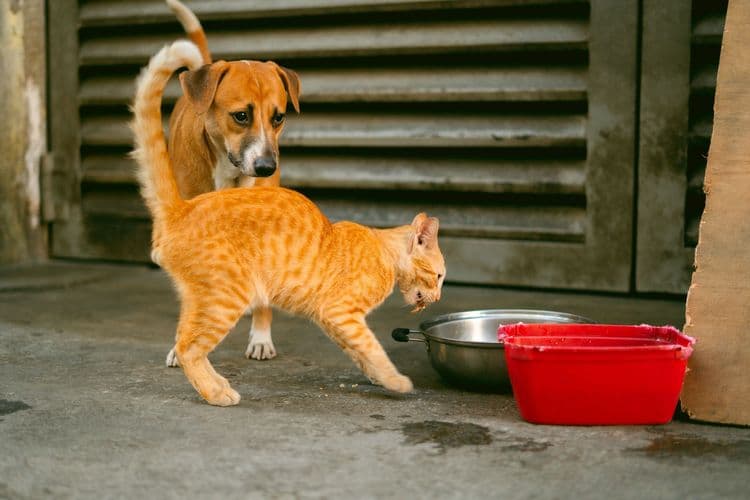
If multiple pets are involved, separate feeding stations often help more than complicated corrections. Feed pets where they cannot stare at, block, or steal from each other. Pick up bowls after a reasonable window if your veterinarian has not advised free feeding. For cats, consider whether the feeding area feels exposed; some cats eat poorly when a dog, another cat, or loud appliance is nearby.
Treats need accounting, not guilt
Treats are part of the diet. That does not mean they are bad. It means they need a treat budget. Put the day’s treats in a small container each morning. When the container is empty, training can continue with praise, play, or part of the normal meal if appropriate.
This works better than asking every person to remember what everyone else already gave. It also makes brand-style differences less confusing. A tiny training treat, a piece of kibble, a food-stuffed rubber toy such as a Kong-style toy, and a dental chew do not affect the day in the same way.
Watch the size of training treats. A “small” treat for a person can be large for a toy dog or a sedentary indoor cat. Break soft treats into tiny pieces when the goal is repetition. For chews, count both calories and chewing style. A chew that is safe for one pet may be too hard, too rich, or too swallowable for another.
Use bowls and locations deliberately
A bowl is not just a container. Height, shape, slipperiness, noise, and location can change how a pet eats. Some cats dislike whisker pressure from deep narrow bowls. Some dogs push lightweight bowls around and become frustrated. A mat can reduce sliding and help the household see spills or dropped kibble.
Do not place food next to litter boxes, harsh cleaning smells, or busy doorways if there is another reasonable option. Water should be easy to access and refreshed often. If you are changing water bowl location, add the new bowl before removing the old one so the pet is not forced to search.
Use a two-week feeding log template
After two weeks, compare the goal with the notes. Did meals become calmer? Did treats become easier to track? Did stool, appetite, or energy change? Did one household member find the plan unrealistic?
A simple log can look like this:
The details do not need to be workable. They need to be consistent enough to reveal whether the change helped. A routine that looks workable but fails on busy weekdays is not the right routine. Adjust the plan to the home, not to an ideal schedule.
Keep the final version simple: meal times, measured amount, treat budget, feeding location, and the person responsible. Tape it inside a cabinet or store it in a shared note. Update it after veterinary visits, food changes, weight changes, travel, or a new pet entering the household.
Know the boundary
Feeding routines can improve consistency, but they cannot explain every appetite or weight change. Sudden hunger, thirst, refusal to eat, vomiting, diarrhea, weakness, or rapid weight change deserves professional input. The home plan should make useful observations easier to share with a veterinarian, not delay care. A calm routine is a tool; the pet’s health signs decide when the tool is no longer enough.
Separate appetite from attention seeking
Not every request near the food bowl means hunger. Some pets learn that food is the fastest way to get attention, movement, or a predictable response from a person. Before increasing food, ask what happens if you offer a walk, play, grooming, training, or quiet company. If the pet relaxes after interaction, the routine problem may be social rather than nutritional.
This distinction matters because extra food can quietly become the household’s answer to boredom. Use a short list of non-food responses beside the feeding chart. For example: refill water, five minutes of play, toilet break, puzzle toy with part of the measured meal, or settle on a mat. Food can still be part of training, but it should remain inside the day’s plan.
Plan for travel and disrupted days
A feeding routine should include a backup version for late meetings, school events, travel, boarding, or pet sitters. Write the backup in plain terms: where the food is stored, how it is measured, which treats are allowed, what the pet should not receive, and what signs require a call.
If your pet is sensitive to change, practice the backup before it is needed. Let another household member feed one meal while you are home. Use the travel bowl for a normal meal. Pack food in labeled portions for a weekend before a longer trip. The goal is to make the unusual day feel less unusual to the pet and easier for the person helping.
Keep water separate in your notes
Food and water observations should not be blended together. A pet who seems hungry may actually be visiting the feeding area because the water bowl is nearby. A pet who drinks much more than usual may need veterinary attention even if eating looks normal. Record water refills, unusual thirst, and bowl location separately from food.
If you add wet food, change water bowl placement, or introduce a fountain, note the date. Otherwise a change in drinking behavior may look mysterious later. Simple notes give a veterinarian better context if a health concern appears.
A household example
Imagine a two-pet home where the dog finishes dinner in thirty seconds and the cat leaves half a bowl untouched. The family first assumes both pets dislike the food. The notes show a different pattern: the dog eats fast only when the cat is nearby, and the cat returns to the bowl only after the dog leaves the kitchen.
The first fix is not a new diet. It is a location change. The dog eats behind a baby gate with a slow feeder, and the cat eats on a quiet counter-height station away from the dog. Food, portions, and timing stay the same for one week. If the notes improve, the household has learned something specific without blaming the food. If they do not improve, the log gives a veterinarian or qualified behavior professional clearer information.
Keep the language consistent
Use the same words on the feeding chart every day. Write breakfast, dinner, training treats, chew, slow feeder, and veterinary advice instead of inventing new descriptions each time. Consistent words help pet sitters, children, and tired adults follow the plan.
Avoid vague entries such as “a little extra” or “some snacks.” Write “one tablespoon,” “three pea-sized treats,” or “half the usual chew” when you can. Exactness is not about perfection. It prevents accidental drift.
When to call a veterinarian before following How to Change a Pet Feeding Routine Without Guesswork
Call before making food changes if the pet is very young, senior, pregnant, losing weight, vomiting repeatedly, having diarrhea, refusing food, drinking much more than usual, or taking medication. Nutrition advice is safest when it fits the pet in front of you, not an average pet online.
Change one feeding variable at a time
Feeding routines have many variables: food type, amount, timing, bowl location, treats, toppers, supplements, and who feeds. Changing several at once makes it impossible to know what helped or hurt. Pick one variable, keep the rest steady, and track the response for several days.
A pet with vomiting, diarrhea, weight loss, appetite changes, urinary signs, chronic disease, pregnancy, or medication needs should not be managed by guesswork. Bring the routine notes to a veterinarian.
A practical feeding change worksheet
The worksheet is deliberately simple. If it cannot fit on one page, the plan is probably too complicated for the whole household to follow.
Multi-pet homes need extra control
Separate feeding during any routine change. Otherwise, one pet may steal the new food, another may miss calories, and a slow eater may be pressured away from the bowl. Pick up unfinished meals, label medical diets clearly, and give each pet a predictable station.
Dog and cat feeding rhythm differences
Cats often do better with smaller meals or controlled grazing when calories can be measured. Dogs often adapt well to set meal times, but the plan depends on age, size, medication, activity, and household schedule. Multi-pet homes need separate stations so one pet does not steal the new routine.
Change timing, amount, food, bowl location, or treat rules one at a time. Otherwise you cannot tell which change helped.
Life-stage adjustments
Puppies and kittens need age-appropriate feeding frequency and should not have meals restricted without veterinary guidance. Healthy adults can often move schedules gradually. Senior pets may need easier bowl access, medication timing, or smaller meals if advised by a veterinarian.
If appetite changes suddenly, do not treat it as a scheduling problem first. Look for illness signs such as vomiting, diarrhea, weight change, pain, urinary signs, or lethargy.
Sensitive stomach and chronic disease pacing
A sensitive-stomach pet may need smaller timing changes before any food change. Move one meal by 15 to 30 minutes, hold for two or three days, and track stool, appetite, vomiting, and energy. Do not change food, treats, toppers, and meal timing all at once.
Pets with kidney disease, diabetes, pancreatitis, inflammatory bowel disease, urinary diets, allergies, or prescription food should follow a veterinarian’s plan. For those pets, the question is not only “Will the stomach tolerate this?” It is also whether the timing, calories, medication schedule, and diet purpose still fit the diagnosis.
Seven-day feeding routine worksheet
Use the worksheet to separate routine changes from diet changes. For a new food, use the food-switching guide.


