

Use life stage, body condition and veterinary guidance before trusting package claims.
- Match food to life stage
- Measure treats and extras
- Ask a veterinarian about medical diets
Safety note: This article provides general pet nutrition education only. It is not veterinary medical advice, diagnosis, treatment, or a diet prescription. Contact a veterinarian before changing food for puppies, seniors, pregnant pets, pets with chronic disease, or pets with vomiting, diarrhea, weight loss, refusal to eat, or suspected toxin exposure.
By Best Pet Care Guide Editorial Team
Indoor cats can gain weight quietly. A few extra treats, a full bowl that is always available, less play during a busy season, and a second cat’s leftovers may not look like much day to day. Months later, the cat seems less willing to jump, grooms less easily, or sleeps more.
Weight management in cats needs caution. Sudden severe food restriction can be dangerous. The goal is not to make a cat hungry and miserable; it is to understand intake, increase appropriate movement, and make changes with veterinary guidance.
This routine also connects with how to read a pet food label without chasing marketing claims and how to switch pet food without turning dinner into a stomach problem, especially if you are making several small changes without overwhelming your pet.
First measurements for an indoor cat weight goal
Before changing food, measure what the cat actually eats. Include dry food, wet food, treats, table scraps, food puzzles, and stolen food from other pets. Many households discover they were feeding more than they thought.
Use a measuring cup consistently or a kitchen scale if recommended. Guessing by bowl level is unreliable.
Measure for a full week before making a big conclusion. Weekends, workdays, visitors, and late-night snacks can all change what the cat eats. A cat may receive one treat from a child, another from an adult after dinner, and a few pieces of kibble used to lure them away from a countertop. Each person may think their part is small, but together the extras become the routine.
Write the amount in plain language the household can follow: “two level scoops from this cup” or “half the can at breakfast and half at dinner.” If the plan requires mental math at every meal, someone will eventually guess. Consistency is more useful than a complicated system that breaks after three days.
Body condition matters more than the number alone
Weight alone can mislead because cats differ in frame size. Ask a veterinarian about body condition score. At home, notice whether the waist is visible from above, whether ribs can be felt with light pressure, and whether belly fat affects movement.
Do not shame the cat or the household. Use the information to build a better routine.
Also notice what the cat can comfortably do. Can they jump to a usual chair? Do they avoid grooming the back half of the body? Do they tire after short play? Do they choose the floor instead of a favorite window perch? These clues do not replace a veterinary exam, but they make the conversation more useful.
Photographs can help if used carefully. Take a top-down and side photo every few weeks in the same place, with the cat standing naturally. Do not obsess over daily changes. The point is to see slow trends that are easy to miss when you look at the cat every day.
Meal changes that are easier to keep
Any diet change should be gradual unless a veterinarian says otherwise.
Make the first change small enough that the cat still trusts the routine. For many homes, the first step is not reducing calories; it is stopping the accidental extras. Put treats in one container for the day. When the container is empty, the treat budget is done. If a family member wants to give a treat, they take it from that container instead of opening a second bag.
If switching food is part of the plan, transition gradually unless a veterinarian gives different instructions. Sudden changes can upset digestion and make the cat refuse food. For cats, refusal to eat is not a harmless protest to wait out.
Add movement without forcing exercise
Cats are not small dogs. Many do not respond well to long forced play. Use short sessions. Move a wand toy away like prey, hide it behind furniture, let the cat stalk, then allow a catch. Two five-minute sessions may work better than one exhausting session.
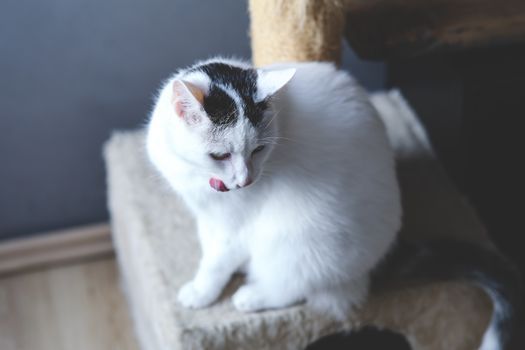
Indoor cats need movement plans that match their comfort and confidence. Photo by Karolina Grabowska www.kaboompics.com on Pexels.
Food puzzles can help some cats, but start easy. A frustrated cat may quit eating or become stressed.
Think in seconds, not workouts. A heavier cat may play for thirty seconds, sit, then play again later. That still counts. Use furniture to make the toy disappear and reappear. Drag it around corners. Let the cat catch it. Endless waving in the air can make the cat watch instead of move.
Place small movement opportunities where the cat already spends time. A scratcher near the window, a low step to a perch, or a toy beside the hallway may work better than expecting the cat to cross the house for a scheduled exercise session.
What to skip: sharp food cuts
A sudden large food cut can be risky for cats and may fail behaviorally. The cat becomes frantic, steals food, wakes people at night, or fights with other pets. Slow change is more sustainable.
If the cat is very overweight, has medical problems, or has not had a recent exam, ask for a veterinary weight plan.
Multi-cat homes need extra structure
If one cat needs weight control and another does not, free feeding becomes difficult. Use separate rooms, timed feeders, microchip feeders, or supervised meals. Watch slow eaters and shy cats; they may lose access when a bolder cat approaches.
Do not assume the heavier cat is always the thief. Sometimes the heavier cat is eating normally, while another cat is leaving food behind because of stress, dental pain, or competition. Watch the meal from beginning to end for a few days. Who approaches first? Who leaves first? Who returns when people walk away?
In a multi-cat home, a diet plan can fail because the feeding station is in the wrong place. A narrow hallway, laundry room, or corner may let one cat block another. Spread food stations out enough that each cat can eat without staring directly at another cat.
Track progress gently
Track food amount, treats, play sessions, and weight checks. Do not weigh daily and panic over normal fluctuation. A clinic can suggest a safe monitoring schedule.
If the cat stops eating, do not celebrate the calorie drop. Appetite loss in cats can become serious.
Use the same scale and method when possible. Some owners weigh themselves, then weigh themselves holding the cat, but that can be inaccurate for small changes. A veterinary clinic may offer more reliable weigh-ins. Ask what pace of change is safe for your cat, especially if the cat is significantly overweight.
Progress may show up before the number changes much. The cat may jump more comfortably, groom better, play a little longer, or stop begging constantly once meals become predictable. Those signs matter, but they should sit alongside veterinary guidance rather than replacing it.
The hidden calorie audit
Treats are not the only hidden calories. Shared dog food, another cat’s leftovers, lickable treats, table scraps, and food used for medication can all add up. For one week, write down everything the cat eats. Do not change anything yet. Just measure.
This audit often reveals the easiest fix. Maybe the cat is not eating too much at meals, but is finishing another pet’s bowl. Maybe treats doubled because two family members both offer them.
Make play easier for a heavier cat
A heavier cat may not leap and twist comfortably. Start with ground-level play. Drag the toy slowly behind a chair. Let the cat stalk. Use short sessions. Celebrate small movement.

Do not shame the cat for lying down. Pause, reset, and try again later. The goal is repeatable movement, not athletic performance.
Weigh-ins without obsession
A veterinary clinic can help set a safe target and timeline. At home, avoid daily panic weighing. Use a consistent schedule and look for slow trends. If weight drops too quickly or appetite changes, stop and ask for help.
A safe weight plan should make the cat healthier, not anxious, hungry, or weak.
Pick the first change carefully
If the cat is still eating normally and simply gaining slowly, begin with measurement and treat accounting. If the cat is very overweight, older, or has not had a recent exam, start with a veterinary visit before changing calories. If the cat has stopped eating, that is not a diet success; it is a medical warning.
If another pet is stealing or sharing food, fix the feeding setup before changing the diet. If the cat eats from boredom, add predictable play and food work before assuming hunger is the only issue.
First-month mistakes that set cats back
Skip crash diets. Skip switching foods every week. Skip free-pouring from the bag. Skip letting one person reduce meals while another person adds treats. Skip intense play that frustrates a heavier cat.
The first month is about clarity: what goes into the bowl, what extras are offered, how the cat moves, and whether the routine is sustainable.
Another mistake is making the cat’s world smaller. If the cat begs, people may shut them out of rooms. If the cat struggles to jump, people remove perches. If the cat is bored, people only reduce food. A weight plan should add appropriate activity and comfort while it manages intake.
Keep some pleasures in the day. Use part of the measured food for a simple puzzle. Offer a play session before a meal. Keep a comfortable perch accessible with a step. The cat should not experience the plan as a sudden loss of everything enjoyable.
A realistic two-week starter plan
- Days 1-3: measure meals, treats, stolen food, and leftovers without changing the diet.
- Days 4-7: set one household treat budget and stop free-pouring from the bag.
- Week 2: separate meals if another pet is involved and add two short play sessions most days.
- End of week 2: review the log before changing portions further.
This slower start may feel modest, but it prevents the common household argument where one person thinks the cat is being starved and another thinks nothing is changing. The log makes the plan visible. If the cat has medical issues, use the same log at a veterinary appointment so the plan can be adjusted safely.
When to call a veterinarian before following Indoor Cat Weight Management Without Crash Diets
Call before making food changes if the pet is very young, senior, pregnant, losing weight, vomiting repeatedly, having diarrhea, refusing food, drinking much more than usual, or taking medication. Nutrition advice is safest when it fits the pet in front of you, not an average pet online.
Crash diets are dangerous for cats
Cats should not be put on abrupt severe calorie restriction without veterinary guidance. Rapid weight loss can be dangerous. A safer plan starts with body condition, current food, treat calories, feeding method, and realistic activity changes.
The first step is measurement. Guessing portions makes weight management emotional and inconsistent.
A cat-friendly weight plan
Use measured meals, puzzle feeders if the cat tolerates them, short play sessions, and a weekly weight or body-condition check. Keep changes small enough that the cat still eats reliably. If the cat refuses food, stop and seek veterinary advice.
Multi-cat homes need separate feeding. Otherwise, one cat may diet while another steals the calories.
What to ask the veterinarian
Ask about target weight, safe rate of loss, daily calories, medical causes of weight gain, and how to monitor progress. Bring the food label, treat list, and feeding schedule. A practical plan depends on the cat’s age, health, and household, not only the number on the scale.
Related reading for the same problem
For nearby nutrition topics, compare how to read a pet food label without getting pulled into marketing, how to switch pet food without upsetting the stomach, and the pet food marketing claims dictionary.
Related reading for the same problem
For nearby nutrition topics, compare the full pet food label-reading guide, the food marketing claims dictionary, and the food-switching guide.
What nutrition labels get right for cat weight
Nutrition guidance is most useful when it compares calories, portions, life stage, and daily context instead of trusting the front of the package. Cat weight management needs that same boring math. The label, treats, toppers, shared bowls, and stolen bites all count.
Crash diets are risky for cats. A safer plan starts with a veterinarian, a measured baseline, slow adjustments, and enrichment that makes food more interesting without adding extra calories. If a cat stops eating, the plan is no longer a normal diet tweak.
Source notes and further reading
- WSAVA: Global nutrition guidelines
- AVMA: Your pet’s healthy weight
- Cornell Feline Health Center: Obesity
- FDA: Pet food labels - general information


