bestpetcareguide.comHousehold routines, behavior notes and safety checks
Routine care note
A Senior Dog Home Routine That Supports Mobility Without Overdoing It
A practical senior dog routine for traction, short walks, pain observation, weight, nails, bedding, recovery time, and home adjustments that preserve comfort.
Care note
Start with the smallest routine that the pet and household can handle consistently.
Routine Checklist
Keep sessions short and predictable
Watch comfort and stress signals
Escalate grooming or health concerns to a pro
Safety note: This article provides general household pet safety guidance only. It is not veterinary medical advice, diagnosis, poison-control instruction, or emergency treatment guidance. If a pet swallows a toxic item, foreign object, medication, chemical, battery, string, or sharp object, contact a veterinarian or animal poison control right away.
By Best Pet Care Guide Editorial Team
An older dog may not announce discomfort clearly. They may still wag at the leash, follow people into the kitchen, and climb onto the sofa because those habits are familiar. Then, a few minutes later, they move stiffly, hesitate at the stairs, or sleep so deeply that the family assumes the day simply tired them out.
Senior care is rarely about stopping everything. In many homes, the better answer is smaller changes made earlier: shorter walks, steadier traction, warmer resting places, fewer slippery turns, and closer attention to how the dog recovers after normal activity.
Age alone does not tell you what a dog needs. A twelve-year-old small dog may still move easily while an eight-year-old large dog struggles with stairs. Watch for changes from that dog’s own normal pattern.
Does the dog need two tries to stand? Do they avoid one room because the floor is slick? Do they stop halfway through a familiar walk? Do they sleep apart from the family because a favorite spot became hard to reach? Those details are more useful than simply saying,“He’s getting old.”
Write down two or three patterns for a week. Many mobility problems look random until you notice that they happen after long walks, cold mornings, nail trims that are overdue, or a slippery hallway.
Try to separate willingness from ability. A senior dog may still want to follow the family everywhere, even when movement is uncomfortable. They may wag at the leash because walks are emotionally important, not because the old route still fits their body. Watching recovery helps you respect both truths: the dog still enjoys participation, and the routine may need to be smaller.
Video can help if you use it responsibly. A short clip of the dog standing up, walking across the room, or using stairs may help a veterinarian understand what you see at home. Do not stage painful movements for the camera. Capture ordinary moments and stop if the dog struggles.
A practical mobility check at home
This table is not a diagnosis. It is a way to decide what to observe and what to change first.
Keep senior dog walks simple and predictable
Senior dogs often do better with repeatable walks than heroic exercise. A familiar route lets you notice changes quickly. If the dog usually completes the loop comfortably and suddenly lags at the same corner, that is information.
Try replacing one long walk with two shorter walks. Keep the pace easy. Allow sniffing. Avoid turning every outing into a fitness test. A dog who moves well for ten minutes and then drags through the last twenty is not getting a better workout; they may be practicing fatigue.
Weather matters. Cold can make stiffness more visible. Heat can make recovery harder. Slick rain, ice, and wet leaves can turn an ordinary sidewalk into a risky surface for an older dog.
Photo for demonstration only. Actual pet care setup should be adjusted based on pet age, health, behavior, home layout, and veterinary advice. Copyright belongs to the respective photographer and is used under the source license.
Small mobility changes are easier to judge when you watch the dog’s normal movement. Photo by Lisa from Pexels on Pexels.
The floor may be the biggest hidden problem
Many senior dogs live on surfaces designed for human cleaning rather than animal traction. Wood, tile, laminate, and polished concrete can make a dog tense their body every time they cross a room. That tension can become part of the daily fatigue.
Add runners in the routes the dog uses most: bed to door, door to water bowl, hallway to living room. Put a mat where the dog stands to eat. If a dog slips when jumping off furniture, remove access or add a safer step-down option.
Do not wait until the dog falls dramatically. Small slips teach a dog to avoid movement, and avoidance can look like laziness.
Focus first on the paths the dog uses every day. Bed to door. Door to yard. Sofa to water. Food bowl to resting place. A runner in the exact walking lane may help more than a decorative rug in the center of the room. Secure rugs so they do not slide and create a new hazard.
Footing also matters near excitement points. Dogs often slip at the front door because they hurry to greet people or go outside. Place traction where the dog accelerates, turns, and stops. Those moments create more strain than slow walking in a straight line.
Why you should not stop senior dog exercise completely
When an older dog seems stiff, some families stop walks almost entirely. That can backfire. Movement supports muscle, weight control, mental interest, and bathroom routine. The goal is not to force long exercise; it is to keep manageable movement in the day.
Ask a veterinarian what level of activity is appropriate if the dog has a known medical condition. For many dogs, gentle consistency works better than weekend bursts followed by several quiet days.
Weight, nails, and bedding all count
Mobility care is not only about joints. Extra weight can make movement harder. Long nails can change how paws meet the ground. Thin bedding can make resting uncomfortable. A cold draft near a bed can make mornings harder.
Keep the water bowl easy to reach. Put bedding where the dog can rest near the household without being stepped over. If the dog startles when woken, choose a quieter corner and teach children to call the dog before touching.
Nail care deserves patience. Long nails can affect posture, but a senior dog may also find nail trims stressful or uncomfortable. Ask a groomer or veterinarian for help if trims have become difficult. Do not wrestle a painful older dog through a full trim at home and then wonder why they avoid handling next time.
Bedding should support getting up as well as lying down. A bed that is very soft may feel comfortable but make standing harder. Watch how the dog exits the bed. If they sink, scramble, or avoid the bed after resting, try a firmer surface or a lower edge.
Pain and mobility signs that should not wait
Call a veterinarian if stiffness is sudden, one leg is not bearing weight, the dog cries out, falls repeatedly, pants at rest, stops eating, has a swollen joint, or changes behavior quickly.
Ask for veterinary guidance before giving human pain medicine. Many human medications are dangerous for dogs.
Pain management, physical therapy, weight plans, and home changes can work together, but they should be built around the individual dog.
Subtle pain signs matter too. A dog may lick one joint, avoid being brushed in one area, sleep more, become irritable, or stop jumping into the car. Families sometimes notice these changes only after pain is treated and the dog becomes brighter again.
Do not wait for crying as proof. Many dogs do not vocalize with chronic discomfort. Behavior changes, posture changes, and reluctance can be the more reliable clues.
Morning routine tips for senior dog mobility
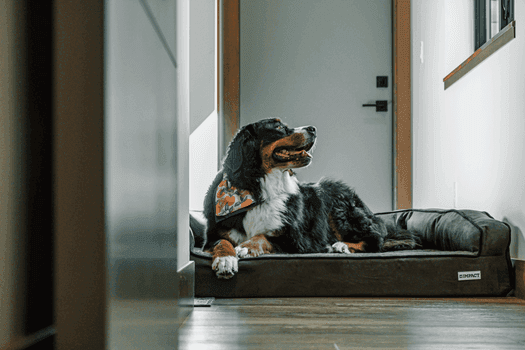
Comfortable rest areas matter as much as walk length for senior dogs. Photo by Impact Dog Crates on Pexels.
A senior routine should fit the household. If it depends on five workable training sessions and constant observation, people will abandon it by the second week. Build around moments that already happen: waking up, first bathroom trip, breakfast, midday rest, evening walk, and bedtime.
In the morning, give the dog a minute before asking for movement. Some older dogs need time to stretch and orient themselves. If the dog sleeps on a bed, make sure the first step down is stable. If the dog sleeps on the floor, watch whether they rock back and forth before standing. That tiny delay can be your first sign that the morning routine needs more support.
After breakfast, avoid immediate rough play or fast stairs. A slow bathroom trip and a short sniff outside may be enough. Midday can be a rest period with water nearby and a comfortable surface. Evening may be the best time for a slightly longer walk if the temperature is mild and the dog has moved well through the day.
Use this simple daily rhythm as a starting point:
Morning: give the dog time to stand, then take a slow bathroom trip.
Midday: offer rest on a supportive surface with water nearby.
Afternoon: use a short sniff walk rather than a long fitness walk.
Evening: check recovery before adding play, stairs, or car rides.
Bedtime: clear the path to the sleeping area and keep traction in place.
Recovery tells you more than distance
A dog may look fine during activity and pay for it later. Track how the dog moves two hours after a walk and the next morning. Stiffness after rest, reluctance to rise, or unusual quietness after a busy day may mean the routine was too much.
Use a simple note: walk length, surface, weather, appetite, and next-morning movement. Patterns often show up within two weeks.
Recovery notes can prevent the weekend problem. A dog who rests all week and then takes a long Saturday outing may seem happy during the adventure but struggle afterward. More consistent small movement is often kinder than occasional big efforts.
If family members disagree about what the dog can handle, the log can lower the argument. Instead of debating whether the dog “likes long walks,” you can look at what happens later that day and the next morning.
Budget note for senior dog comfort
Start with traction before expensive furniture. Washable runners, a stable mat by the bowl, and a clear path to the door may help immediately. If a ramp is needed, choose one that is stable and not too steep. A wobbly ramp can make a cautious dog more worried.
Spend money where the dog actually struggles. A beautiful orthopedic bed does not solve a slippery hallway, and a hallway runner does not solve untreated pain.
In the US, owners can usually find basic runners, non-slip stair treads, ramps, and supportive beds through local pet shops, veterinary clinics, or general online retailers. The brand is less important than the fit: stable, washable, low enough to use, and placed where the dog actually slips.
For weight-related mobility concerns, ask your veterinarian whether tracking pounds or kilograms is more useful for your dog’s plan. Use the same unit each time so the trend is clear.
When to ask a professional about senior mobility
Ask a veterinarian if home changes help less than expected, if the dog avoids normal touch, or if movement changes are paired with appetite, breathing, or behavior changes. Professional guidance can separate ordinary aging from pain, injury, or disease that needs treatment.
Ask sooner if the dog is large, overweight, has a known orthopedic history, or is taking medication. Home changes are helpful, but they should not become a way to postpone care when the dog is painful. A veterinarian may suggest pain control, diagnostics, weight management, rehabilitation, or changes to activity that are safer than guessing.
A realistic first weekend reset
Start with the highest-traffic route in the home. Add traction from the dog’s bed to the door. Clear one nighttime path. Shorten the longest walk by a third and add a slower sniff break instead. Watch the next morning before deciding whether the change helped.
Then choose one more adjustment, not ten. If the dog struggles at the sofa, block jumping or add a stable step. If the dog slips at meals, add a mat.
If the dog is stiff after cold mornings, warm the resting area and allow extra time before the first walk. Small changes are easier to judge and easier for the dog to trust.
Observation notes for the next appointment
Bring simple notes to the next veterinary visit: when stiffness appears, which surfaces cause slipping, how long walks last, and how the dog moves the next morning. Include changes in appetite, sleep, mood, or willingness to be touched.
These notes help the appointment focus on the dog’s real daily pattern rather than one short clinic moment.
Senior health guidance often comes back to one point: older age changes risk, but age by itself does not explain everything. A senior dog who suddenly refuses stairs, slips more often, pants at night, or stops wanting a usual walk may be showing pain, vision change, dental pain, heart trouble, or another medical issue.
A home routine can help with traction, bedding, shorter walks, and easier routes. It should not replace a veterinary check when comfort changes. The right plan combines home observation with professional guidance.