
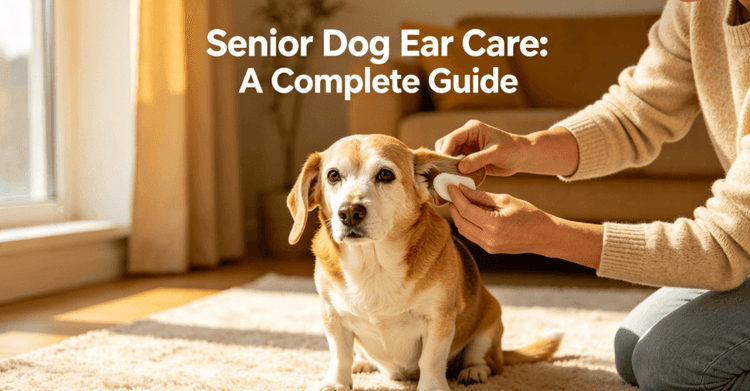
Start with the smallest routine that the pet and household can handle consistently.
- Keep sessions short and predictable
- Watch comfort and stress signals
- Escalate grooming or health concerns to a pro
Safety note: This article provides general household pet safety guidance only. It is not veterinary medical advice, diagnosis, poison-control instruction, or emergency treatment guidance. If a pet swallows a toxic item, foreign object, medication, chemical, battery, string, or sharp object, contact a veterinarian or animal poison control right away.
By Best Pet Care Guide Editorial Team
Ear care for an aging pet should be cautious, boring, and observation-led. A senior dog or cat may scratch, shake the head, rub against furniture, or dislike ear handling for several different reasons. Wax, allergies, infection, mites, skin disease, pain, trapped moisture, and growths can all change how ears look and feel. Age can make a pet less tolerant of handling, but age alone does not explain every ear problem.
That is the first safety rule: do not treat every ear symptom as “just dirty ears.” Home care can help with routine observation and gentle outer-ear cleaning, but odor, pain, discharge, swelling, bleeding, sudden head tilt, repeated shaking, or a pet who cries when touched should be discussed with a veterinarian.
For a connected next step, read a senior dog home routine that supports mobility without overdoing it and how to notice pet pain without guessing from one symptom. They give more detail on the household routines that usually sit beside this decision.
What changes in senior pet ear care
Senior pets often need slower handling. They may have arthritis in the neck, dental pain, skin sensitivity, reduced hearing, or anxiety from previous painful ear episodes. A pet who tolerated cleaning years ago may now pull away because the position hurts, not because they are being difficult.
The practical routine is simple:
- look at both ears in good light
- smell for unusual odor without crowding the pet
- check for redness, swelling, discharge, crusting, or pain
- wipe only visible outer-ear debris if the ear is otherwise comfortable
- stop if the pet resists, cries, snaps, or keeps shaking the head
VCA Animal Hospitals and other veterinary sources generally treat persistent odor, discharge, pain, and head shaking as reasons for veterinary advice rather than repeated home cleaning.
Signs that need a veterinarian
Call a veterinarian if you notice:
- strong odor from one or both ears
- black, yellow, bloody, or pus-like discharge
- swelling of the ear flap or canal
- repeated head shaking
- scratching that breaks the skin
- pain when the ear is touched
- balance problems or head tilt
- sudden behavior change around handling
- ear symptoms in a pet with known allergies or chronic skin disease
These signs can look similar at home even when the causes are different. Cleaning alone cannot tell you whether the issue is infection, mites, allergy, foreign material, or another medical problem.
Gentle outer-ear cleaning only
If your veterinarian has said routine cleaning is appropriate, keep the session short. Choose a quiet room, have cotton pads ready, and let the pet stand or sit in a comfortable position. For many senior pets, lying on a slippery table or being held tightly creates more stress than the cleaning itself.
Use a veterinary-recommended ear cleaner only as directed. Wipe visible debris from the outer ear and folds you can see. Do not dig deep into the canal. If cleaner is used, the pet may shake their head afterward; protect nearby walls and furniture rather than stopping the shake.
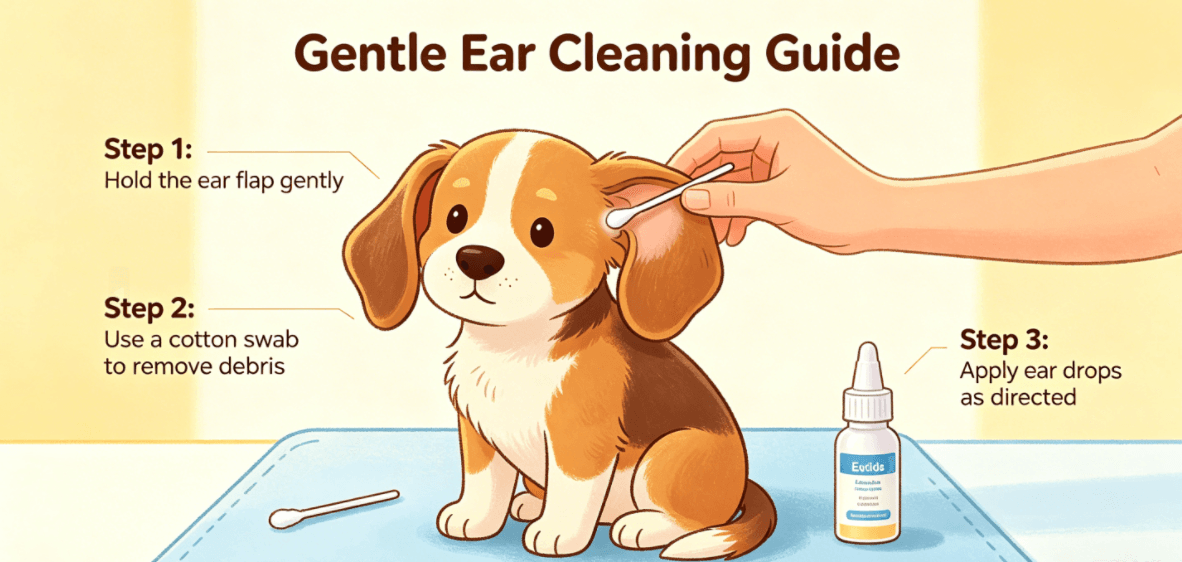
Senior pets often tolerate ear checks better when handling is calm, brief, and limited to visible areas.
A weekly observation log
For one week, write down what you can actually observe:
- Which ear looked different?
- Was there odor, redness, debris, or swelling?
- Did the pet scratch before or after meals, walks, baths, or outdoor time?
- Did the pet resist one side more than the other?
- Did symptoms improve, stay the same, or return quickly after cleaning?
This log helps a veterinarian see patterns. It also prevents the common mistake of cleaning again and again without noticing that the same symptom keeps returning.
What normal does and does not look like
Normal ears do not have to look perfectly spotless. A small amount of light wax may be ordinary for some pets. What matters is change: a new smell, one ear looking different from the other, discharge that returns quickly, or a pet who suddenly dislikes touch.
Do not judge the ear only by color in a photo online. Lighting, coat color, skin pigment, and camera filters can all mislead you. Compare your pet’s ears with their own usual baseline instead.
Bathing and moisture precautions
Moisture can make some ear problems worse, especially when a pet already has irritation. During baths, avoid spraying water directly into the ear canal. Dry the outer ear gently afterward. If your dog swims, ask your veterinarian whether a drying routine is appropriate for that individual dog.
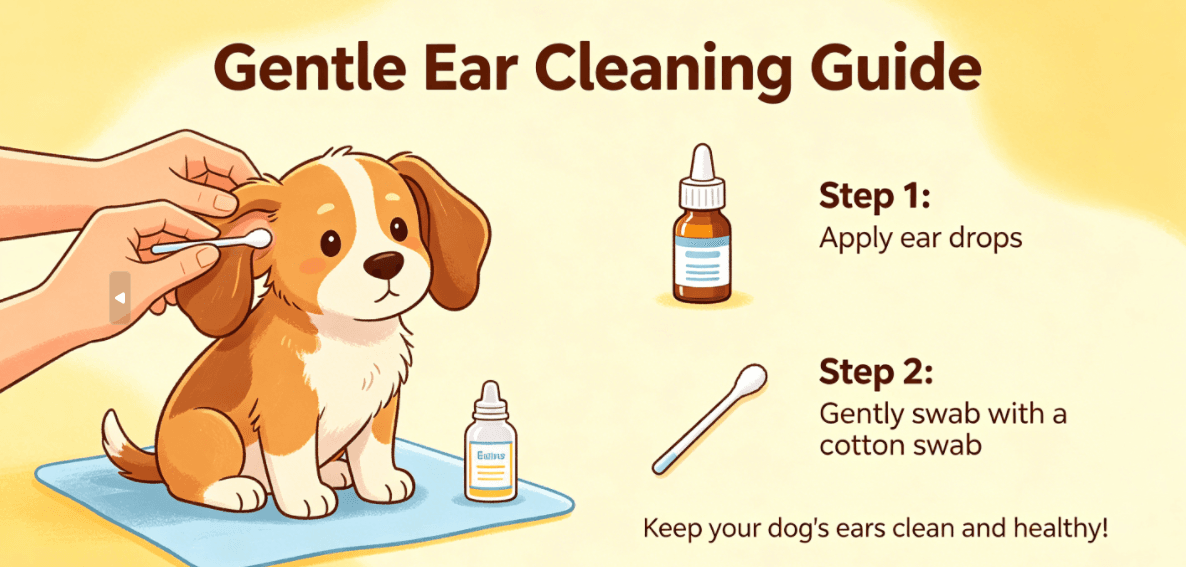
Common mistakes with senior ears
When professional cleaning is kinder
Professional care may be the safer option for pets with severe wax buildup, painful ears, chronic infections, heavy mats near the ears, or a history of biting during handling. A veterinarian can examine the canal, check the eardrum when needed, and decide whether medication or deeper cleaning is appropriate.
For US readers, the American Veterinary Medical Association provides general pet-owner guidance and emphasizes working with veterinary professionals for health concerns.
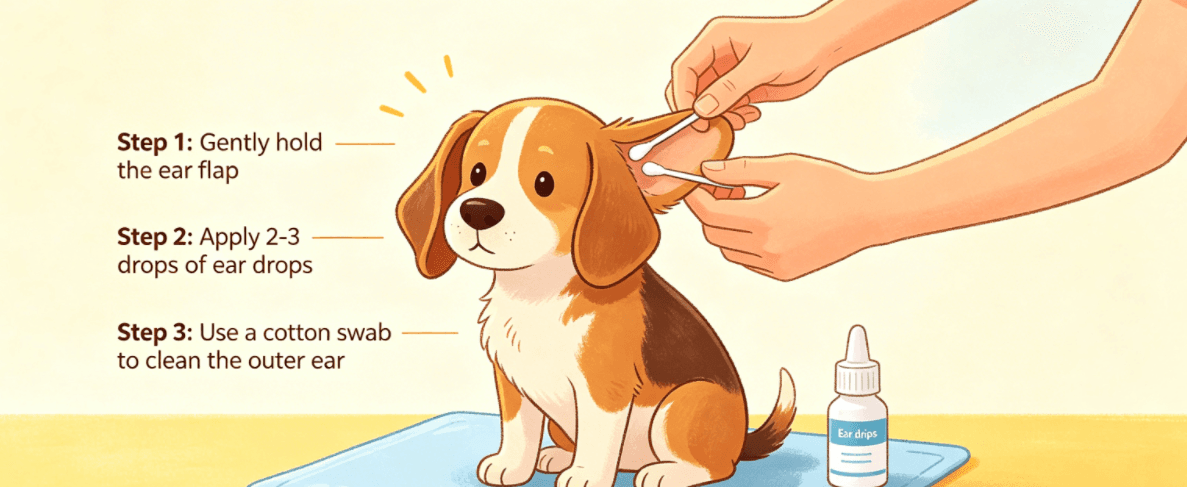
A calm senior-ear routine
Choose one predictable time each week. Touch the shoulder first, then the neck, then briefly lift the ear flap. If the pet stays relaxed, look and smell quickly. If the pet turns away, stiffens, or tries to leave, stop there and try a smaller step later.
The aim is not to complete a workable cleaning session. The aim is to notice changes early without teaching the pet that ear handling always becomes a struggle.
Questions to ask at the next appointment
If ear issues keep returning, bring specific questions:
- Could allergies, skin disease, or anatomy be part of the pattern?
- Is routine cleaning appropriate for this pet, or should it stop?
- Which product is safe for this ear right now?
- How often should the ears be checked between visits?
- What symptom means the pet should be seen sooner?
These questions are more useful than asking for a stronger cleaner. Recurring ear problems often need a diagnosis-led plan, not simply more forceful cleaning.
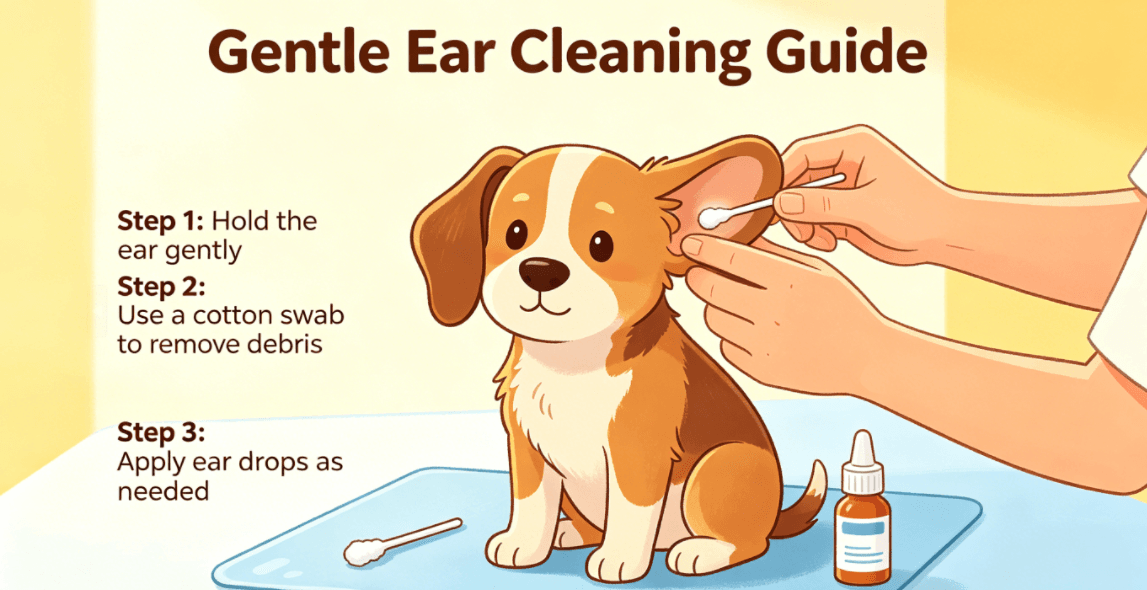
What to observe before cleaning
Look before you clean. Notice whether the ear flap is red, swollen, crusted, smelly, painful, or warmer than usual. Watch whether your pet shakes the head, scratches one ear, tilts the head, pulls away from touch, or loses balance. Those signs are not cleaning problems. They are reasons to call a veterinarian.
For a senior pet, the question is not only whether the ear looks dirty. It is whether the pattern changed. A dog who always has a little wax but is comfortable is different from a dog who suddenly yelps when one ear is touched. A cat who starts hiding after ear handling may be telling you the session hurts.
Make home checks short and predictable
Use the same calm setup each time: good light, non-slip footing, a towel nearby, and no forced restraint. Lift the ear flap briefly, look, praise calm behavior, and stop. If your veterinarian has recommended a cleaner, follow that specific product direction. Do not pour random products into the ear, use cotton swabs deep in the canal, or keep cleaning when the pet is painful.
Home ear care should help you notice changes. It should not turn into repeated digging at a problem that needs medical care.
Senior ear care starts with looking, not cleaning
Older pets may have arthritis, skin changes, hearing changes, or chronic conditions that make handling harder. Before cleaning, look for odor, redness, swelling, discharge, crusting, head tilt, balance changes, scratching, or pain. Those signs are reasons to call a veterinarian, not reasons to clean harder.
Home ear care should help you notice change. It should not become repeated digging at a sore ear.
A gentle outer-ear check routine
Use good light, a non-slip surface, and a short session. Lift the ear flap, look, praise calm behavior, and stop. If your veterinarian prescribed a cleaner, follow that product direction. Do not pour random products into the ear, use cotton swabs deep in the canal, or continue when the pet pulls away in pain.
What to record before the appointment
Note which ear changed, when it started, odor, discharge color, scratching frequency, head shaking, balance changes, and whether the pet reacted to touch. A short note helps the veterinarian separate wax, infection, allergies, mites, foreign material, or pain.
Related reading for the same problem
For nearby daily-care routines, compare the grooming routine your pet can tolerate, pet dental care without forcing brushing, and how to notice pet pain without guessing from one symptom.
Dog and cat ear checks are not the same
Many dogs tolerate ear handling, but long or folded ears can trap moisture and make changes harder to notice. Many cats resist ear handling and need shorter checks. For both species, home care starts with looking at the outer ear, not digging into the ear canal.
Do not put cotton swabs deep into the ear. Do not use human ear drops, alcohol, peroxide, essential oils, or leftover medication unless a veterinarian specifically prescribed it for that pet.
Normal aging or a medical problem
Senior pets can also develop hearing changes. Use visual cues, gentle floor vibration, or a light touch before waking a pet who may not hear you approach.
Senior cat ear notes
Senior cats may show ear discomfort by scratching, head shaking, hiding, avoiding touch, or holding one ear lower. Dark crumbly debris can suggest mites in some cats, but yeast, bacterial infection, polyps, allergies, and masses can also change the ear. Do not assume every dark ear is mites and do not use over-the-counter mite drops without veterinary guidance.
For cats, keep home checks short: look at the outer ear, smell for odor, note debris color, and stop before the cat fights. Pain, odor, discharge, swelling, head tilt, balance changes, or repeated scratching should be handled by a veterinarian rather than deeper home cleaning.
What to write down before the visit
Record which ear changed, when it started, odor, discharge color, head shaking, scratching, balance changes, and whether the pet reacted to touch. A short note is more useful than repeated cleaning attempts. Home cleaning should not delay care when pain, odor, swelling, or discharge appears.
Related reading for the same problem
For nearby daily-care routines, compare the beginner grooming routine, the weekly grooming check, and pain observation without guessing.
Source notes and further reading
- ASPCA Animal Poison Control Center: Animal poison-control guidance
- FDA: Potentially dangerous items for your pet
- AVMA: First aid tips for pet owners
Full medical, behavior, nutrition, and commercial boundary
This article is general pet care education for US pet owners. It is not veterinary medical advice, diagnosis, treatment, nutrition planning, poison-control instruction, emergency guidance, or a substitute for a qualified behavior professional.
Do not delay professional care because of anything on this page. If your pet may have swallowed a toxin, medication, battery, string, sharp object, chemical, or unknown material, or shows severe distress, breathing trouble, collapse, inability to urinate, repeated vomiting, severe pain, or sudden weakness, contact a veterinarian, emergency clinic, or animal poison-control resource right away.
This page does not contain sponsored placements, affiliate shopping links, paid reviews, or brand-provided product samples. If commercial links are added later, they should be disclosed clearly near the relevant link or product section.
Know your pet’s normal
Ear care starts with knowing what is normal for your own pet. A quick weekly look helps you notice new odor, redness, discharge, head shaking, scratching, swelling, or pain before cleaning turns into guessing.
The goal is not deep cleaning. It is observation. If the outer ear looks mildly dirty and your veterinarian has shown you what to use, gentle wiping may be enough. If the ear hurts, smells bad, drains, swells, or keeps coming back dirty, cleaning at home can delay the care the pet actually needs.


