
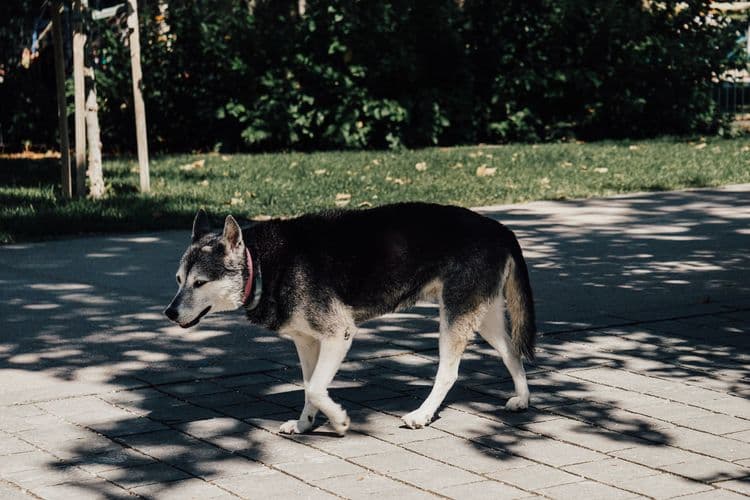
Start with the smallest routine that the pet and household can handle consistently.
- Keep sessions short and predictable
- Watch comfort and stress signals
- Escalate grooming or health concerns to a pro
Safety note: This article provides general household pet safety guidance only. It is not veterinary medical advice, diagnosis, poison-control instruction, or emergency treatment guidance. If a pet swallows a toxic item, foreign object, medication, chemical, battery, string, or sharp object, contact a veterinarian or animal poison control right away.
By Best Pet Care Guide Editorial Team
Hot weather changes an ordinary dog walk. A route that feels comfortable in April can feel punishing in July, especially when pavement stores heat and shade disappears halfway around the block. Some dogs still pull toward the door with the same enthusiasm, which makes it easy to assume they can handle the usual distance.
That is the risky part. Dogs do not always slow themselves down before they are in trouble. Short-nosed dogs, older dogs, overweight dogs, dark-coated dogs, puppies, and dogs with heart or breathing problems may struggle sooner than their people expect. Even healthy dogs can overheat when exercise, humidity, and hot ground stack together.
For a connected next step, read preparing a dog for car rides without making every trip stressful and how to notice pet pain without guessing from one symptom. They give more detail on the household routines that usually sit beside this decision.
A cooler walk starts before the leash goes on
The best summer walk is often decided indoors. Check the hour, the humidity, the surface outside, and the route. Early morning is usually safer than afternoon. Evening can work, but pavement may still hold heat long after the air cools.
Use the back of your hand or bare foot on the walking surface for a few seconds. If it feels too hot for your skin, it is not a good surface for paws. Grass, dirt paths, and shaded sidewalks may be better, but they are not magic shields. Dogs still generate heat from movement.
For dogs who need bathroom breaks during hot parts of the day, think in tiny trips: out, sniff, potty, back in. Save exercise for cooler windows.
Photo for demonstration only. Actual pet care setup should be adjusted based on pet age, health, behavior, home layout, and veterinary advice. Copyright belongs to the respective photographer and is used under the source license.
Water breaks help, but they do not make intense heat safe. Photo by 🇻🇳🇻🇳Nguyễn Tiến Thịnh 🇻🇳🇻🇳 on Pexels.
What changes first when the weather turns hot
Watch the dog, not the step count
Apps make it tempting to chase distance. In hot weather, the dog in front of you matters more than the number. A dog who usually trots smoothly may begin lagging, seeking shade, refusing to continue, panting harder than normal, or lying down on cool ground.
Early signs are easier to act on than late ones. Turn back when the dog slows in an unusual way. Offer water in small amounts. Move to shade or an air-conditioned space. Do not force the dog to “finish the loop” because the house is only ten more minutes away.
Grass and shade can reduce surface heat compared with asphalt. Photo by www.kaboompics.com on Pexels.
Common mistake: cooling only after the walk
People often think about cooling down when they get home. That helps, but it is late. The better routine lowers heat exposure across the whole walk.
Pick a route with exit points. Carry water on anything longer than a quick bathroom trip. Avoid high-intensity fetch or running on hot days unless a veterinarian has cleared that level of exercise for the dog. If your dog is excited by other dogs, choose quieter routes so the walk does not turn into pulling and lunging in the sun.
A simple hot-day walk plan
- Before leaving, check the pavement and look for shade on the route.
- Keep the first walk of the day the main exercise if morning is cool.
- Use midday only for short bathroom trips.
- Let sniffing replace distance.
- Bring water for the dog, not only for yourself.
- End early if the dog slows, seeks shade, or pants harder than usual.
When heat signs need urgent help
Some signs are not “wait and see” problems. Seek veterinary help promptly if a dog has severe weakness, collapse, repeated vomiting, diarrhea, disorientation, seizures, gums that look abnormal, or heavy breathing that does not settle after moving to a cooler place.
Do not use ice baths or extreme cooling without professional direction. Move the dog to shade or air conditioning, offer small amounts of water if the dog is alert, and call a clinic for instructions.
Check the route, not only the weather app
The temperature on a phone does not tell you what the pavement feels like, how much shade the route has, or whether humidity is making cooling harder. Before a summer walk, check the ground with the back of your hand for several seconds. If it feels too hot for your skin, it is too hot for paw pads.
Plan the walk around shade, grass, water access, and distance from home. A shorter loop with easy exits is safer than a long route where the dog must keep going after signs of heat stress begin.
Dogs who need a stricter plan
Some dogs should have a lower threshold for canceling or shortening walks:
- flat-faced breeds
- senior dogs
- overweight dogs
- puppies
- dogs with heart or breathing conditions
- dogs with dark, heavy coats
The AVMA warm weather safety guidance and ASPCA hot weather tips both point toward prevention, shade, water, and avoiding dangerous heat rather than trying to rescue the walk after it goes badly.
A safer exercise swap
If the day is too hot, move the exercise indoors. Use short training sessions, scent games, food puzzles, or a cool hallway recall game. The goal is not to exhaust the dog. It is to give the dog movement and attention without turning heat into the main challenge.
Water breaks are not a full heat plan
Carrying water is useful, but water does not make a risky walk safe by itself. A dog can drink and still overheat if the air is hot, the pavement is radiating heat, and the route has no shade. Plan the route so you can turn back early.
Watch recovery after the walk. A dog who pants lightly and settles within a few minutes is different from a dog who keeps panting hard, seems weak, vomits, has glassy eyes, or cannot cool down. Those signs need urgent veterinary attention.
The leash routine can stay predictable
If your dog expects a walk at a certain time, replace the hot walk with a cooler ritual instead of simply skipping everything. Put on the leash, do a brief shaded potty trip, return inside, and offer a scent game or calm training session. Predictability helps dogs accept the change.
A practical heat check before leaving
Before a summer walk, check three things: surface, shade, and recovery. Touch the pavement with the back of your hand. Look at whether the route has shade or only open sun. Ask whether your dog cooled down normally after the last walk. A dog who was slow to recover yesterday may need a shorter route today.
Bring water, keep the first warm-weather walks shorter, and avoid turning every outing into a distance goal. Flat-faced dogs, senior dogs, overweight dogs, puppies, and dogs with heart or breathing concerns need extra caution. If your dog pants heavily, slows down, seeks shade, drools unusually, stumbles, vomits, or seems confused, stop the walk and seek veterinary guidance.
Change the walk, not only the time
Early morning and late evening are often safer, but timing is not the whole plan. Choose grass or shaded paths when possible. Skip hard running. Let the dog sniff instead of marching. Use a familiar loop so you can turn home quickly if the dog tires.
For dogs who still need mental activity, replace part of the walk with indoor scent work, a food puzzle, or a calm training session. In hot weather, a shorter walk plus quiet enrichment is often kinder than forcing the normal route.
A sample warm-weather adjustment
Instead of a forty-minute midday walk, try a ten-minute shaded sniff walk in the morning, a short bathroom break later, and an indoor scent game in the evening. For many dogs, sniffing and problem-solving reduce restlessness without adding heat stress.
Watch recovery after the walk. A dog who returns home, drinks normally, rests, and acts like themselves is handling the plan better than a dog who pants hard for a long time, seeks cool surfaces urgently, or seems dull. Recovery tells you more than distance.
Pack for the walk you might need, not the walk you planned
Carry water, choose a route with turn-back points, and avoid being embarrassed by a shorter walk. Heat safety often depends on changing the plan early. If the dog slows down at minute eight, turning around is not failure. It is good handling.
For dogs with thick coats, dark coats, short muzzles, senior joints, or known medical concerns, ask your veterinarian what heat limits make sense. General advice is useful, but the dog in front of you matters more than the average dog.
Plan the route before the dog gets excited
Choose a loop with shade, grass, and early turn-back points. Avoid routes that force you across long pavement stretches before you can shorten the walk. A hot-weather route should be easy to abandon without drama.
Check pavement with your hand before committing to the route. If it feels uncomfortably hot to you, it can be unsafe for paws. Grass, shaded paths, and shorter sniff walks are often better than trying to maintain the usual distance.
Dogs who need a stricter heat plan
Use extra caution with flat-faced dogs, senior dogs, overweight dogs, puppies, dark-coated dogs, thick-coated dogs, dogs with heart or breathing problems, and dogs recovering from illness. These dogs may need shorter walks, cooler times, indoor enrichment, or veterinary guidance about limits.
Do not compare dogs at the park. One dog may handle a warm evening easily while another is already in trouble. The dog in front of you sets the plan.
A hot-day replacement routine
Try this on high-heat days:
- Early morning bathroom and sniff walk.
- Midday indoor scent game or calm training.
- Short shaded evening walk if the temperature and pavement are safer.
- Recovery check after each outing.
This preserves movement and mental work without forcing the body through heat it cannot handle.
Heat warning signs that should not wait
Stop and seek veterinary guidance urgently if your dog shows heavy uncontrolled panting, weakness, confusion, collapse, vomiting, diarrhea, glassy eyes, abnormal gum color, or inability to cool down. Do not rely on water breaks alone after serious signs appear.
For senior dogs, combine this with the senior dog mobility routine. For car outings in warm weather, read dog car ride prep without stress.
Include indoor heat risk for cats
Cats can overheat indoors when ventilation is poor, water is limited, or they are trapped in hot rooms, balconies, or carriers. Watch for panting, weakness, drooling, red gums, collapse, vomiting, or unusual hiding. Keep water available, provide cooler rooms, and avoid enclosed sunny spaces.
Outdoor walks are mostly a dog issue, but summer safety is a household issue for both species.
Indoor cat cooling and emergency signs
For indoor cats, check sunny rooms, enclosed balconies, carriers, closets, and rooms with poor airflow. Offer water in more than one place, keep a cooler room accessible, close curtains during the hottest hours, and never trap a cat in a warm laundry room, balcony, or parked vehicle. Long-haired, senior, overweight, flat-faced, heart-disease, and respiratory-disease cats need stricter heat plans.
Panting in a cat is not normal after ordinary rest. Drooling, weakness, red or pale gums, vomiting, collapse, confusion, or open-mouth breathing should be treated as urgent. Move the cat to a cooler area, offer water if the cat can drink normally, use cool (not ice-cold) towels or airflow, and contact a veterinarian or emergency clinic right away.
Heat risk levels for dog walks
Use the seven-second pavement check with the back of your hand as a quick warning, but do not rely on it alone. Humidity, breed, age, body condition, and health matter too.
High-risk dogs need stricter rules
Short-nosed breeds, senior dogs, overweight dogs, puppies, dark-coated dogs, and dogs with heart or breathing disease need more conservative summer plans. Walk early or late, shorten routes, avoid hard running, and bring water. Heatstroke can become life-threatening quickly, so emergency signs should be treated as urgent.
Related reading for the same problem
For related behavior and routine topics, compare alone-time calm, storm and fireworks planning, and car ride preparation.
What running advice changes for normal walks
Good running guidance puts age, health, breed shape, and weather before distance. That same idea matters even when the plan is only a neighborhood walk. A fit young retriever on a shaded trail and an older short-nosed dog on a humid sidewalk are not doing the same activity, even if both routes are one mile.
For regular owners, the useful habit is to choose the walk by conditions rather than by the calendar. On hot days, swap distance for sniffing, shade, and short exits. If your dog has heart disease, airway trouble, obesity, arthritis, or a recent illness, ask your veterinarian what heat and exercise limits make sense before summer becomes the test.
Source Notes and Further Reading
- ASPCA Animal Poison Control Center: Animal poison-control guidance
- FDA: Potentially dangerous items for your pet
- AVMA: First aid tips for pet owners
Full medical, behavior, nutrition, and commercial boundary
This article is general pet care education for US pet owners. It is not veterinary medical advice, diagnosis, treatment, nutrition planning, poison-control instruction, emergency guidance, or a substitute for a qualified behavior professional.
Do not delay professional care because of anything on this page. If your pet may have swallowed a toxin, medication, battery, string, sharp object, chemical, or unknown material, or shows severe distress, breathing trouble, collapse, inability to urinate, repeated vomiting, severe pain, or sudden weakness, contact a veterinarian, emergency clinic, or animal poison-control resource right away.
This page does not contain sponsored placements, affiliate shopping links, paid reviews, or brand-provided product samples. If commercial links are added later, they should be disclosed clearly near the relevant link or product section.


