Look at sleep, enrichment, visitors, sounds and rewards before labeling a pet as stubborn.
- Track triggers before correcting
- Reward the behavior you want repeated
- Use qualified help for fear or aggression
Safety note: This article provides general pet behavior education only. It is not a veterinary diagnosis or a substitute for a qualified behavior professional. Contact a veterinarian or certified behavior professional if behavior changes suddenly, includes aggression, self-injury, panic, house-soiling with pain, or signs of illness.
This article is informational and is meant to help readers prepare better questions and routines, not replace advice from a qualified professional when health, safety, legal, financial, or security concerns are involved. Rainy days are not a problem only because a walk gets shorter. They change the whole rhythm of a home. A dog that usually sniffs a long route may pace between rooms. A cat that normally watches birds from an open window may start knocking objects from a shelf. The useful question is not how to tire a pet out at any cost, but how to provide safe choices that use the nose, paws, eyes, and brain without turning the living room into chaos.
A good enrichment plan is modest. It has a few low-risk activities, clear stopping points, and a way to notice whether the plan is helping. It also respects age, mobility, diet, anxiety level, and household limits. The American Veterinary Medical Association notes that ordinary homes can contain hazards for pets, from medications and cleaners to unsafe foods, so an indoor activity plan should begin with a quick safety sweep rather than a pile of new toys: https://www.avma.org/resources-tools/pet-owners/petcare/household-hazards.
If this topic is part of a wider home routine, it helps to compare it with how to choose safer chews and toys before your pet gets bored and when window watching stresses an indoor cat. Those nearby guides cover moments that often overlap with this one.
Start with the room, not the toy
Choose one room where the pet can be supervised and where fragile, toxic, or chewable items are already removed. Close doors to bathrooms, laundry areas, and offices if those rooms contain bins, cords, cleaning products, or small objects. Put shoes, children’s toys, remote controls, food wrappers, and houseplants out of reach. This is not about making a workable training studio. It is about reducing the number of ways a bored pet can turn a harmless game into a risky one.
For dogs, look for slick floors, low tables, accessible trash, and furniture corners that create tight turns during excited play. For cats, look upward as well as downward: dangling blind cords, unstable shelves, candles, sewing supplies, rubber bands, and open bags can all become part of the game. If you have more than one pet, set up separate stations at first. Competition can turn enrichment into guarding, rushing, or bullying before you notice it.
Use scent before speed
Scent games work well indoors because they ask for concentration rather than sprinting. Start with three or four folded towels or cardboard boxes. Place a few pieces of the pet’s normal food in one spot and let the pet search while you stay nearby. Keep the first round easy. The goal is for the animal to learn the game calmly, not to become frantic. If a pet starts shredding cardboard, swallowing fabric, or barking in frustration, reset with a simpler version.
A useful dog routine is “find breakfast.” Divide part of the morning ration into five tiny piles and hide them in obvious places around one room. A useful cat version is “trail and pause.” Put a small amount of kibble or a familiar treat near a scratching mat, then another near a perch, then another in a shallow puzzle tray. The movement matters, but the pauses matter more. A pet that sniffs, eats, looks around, and chooses the next spot is using attention rather than raw excitement.
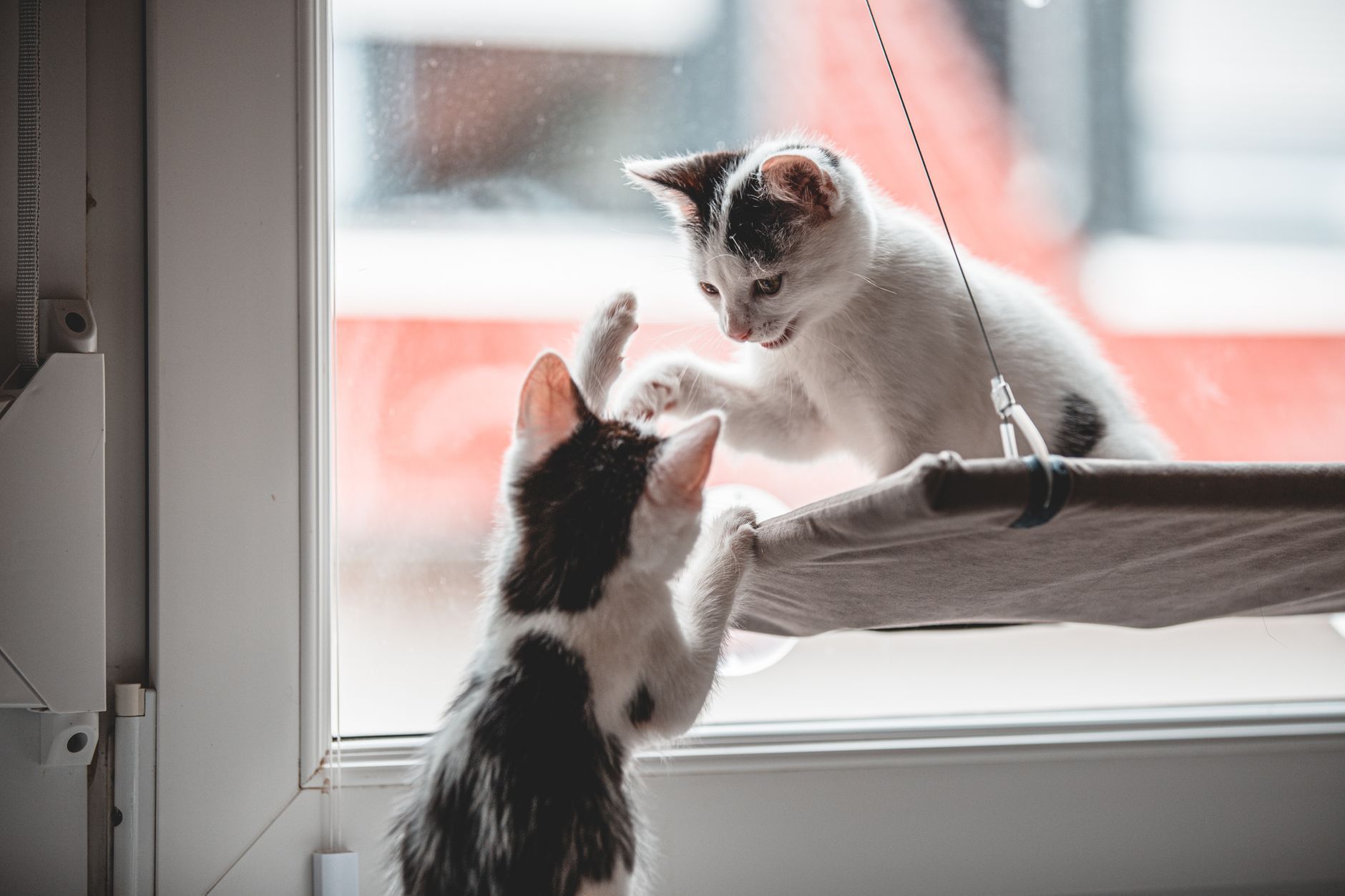
Two adorable kittens playing by a window, showcasing their playful and curious nature. Photo by Anna Hinckel on Pexels.
Make feeding puzzles boring enough to be safe
Puzzle feeders can help, but the best first puzzle is often the least dramatic one. A muffin tin with tennis balls, a towel loosely folded over kibble, or a slow feeder with wide grooves may be more useful than a complex gadget. Avoid hard plastic pieces that can crack, small removable parts, and anything that encourages chewing for pets who swallow objects. If the pet eats a special diet, count puzzle food as part of the daily ration instead of adding endless extras.
Watch the first several sessions from start to finish. The moment a puzzle becomes a wrestling match, the puzzle is too difficult or too exciting. For flat-faced dogs, senior pets, pets with dental pain, or animals on restricted diets, ask a veterinarian what style of feeding activity is appropriate. Enrichment should not make breathing, chewing, weight management, or digestion harder.
Rotate three short blocks
A rainy-day plan works best as three short blocks rather than one long entertainment marathon. Try ten minutes of scent search in the morning, five minutes of gentle training or handling practice at midday, and ten minutes of quiet food puzzle or perch time in the evening. Between blocks, give the pet a predictable rest zone. Many restless animals need help switching off after stimulation, especially if the whole household is indoors and noisy.
Use a simple observation log for two or three days: activity used, duration, appetite, bathroom habits, sleep, and any signs of stress such as hiding, trembling, growling, obsessive licking, repeated barking, or sudden aggression. Patterns matter. One bad afternoon may be weather and household noise. Repeated distress during normal indoor activities deserves a professional conversation.
What to skip
Skip laser-pointer marathons that never let the pet catch anything. Skip high jumping on slick floors. Skip treat hunts in rooms with dropped medication risk. Skip tug games if the dog guards toys or people in the home cannot follow the same rules. Skip online “challenge” ideas that use fear, startle reactions, sticky tape, unsafe foods, or costumes that restrict movement. A pet does not need to be surprised to be enriched.
Also skip the idea that every restless behavior is disobedience. A pet may be under-exercised, anxious, in pain, confused by schedule changes, or responding to noise outside. If a normally settled pet suddenly cannot rest, refuses food, has vomiting or diarrhea, limps, pants heavily, hides, or seems disoriented, treat that as a care signal rather than an enrichment problem.
A realistic plan for tomorrow
Before the next rainy day, put together a small kit: two washable towels, one shallow puzzle tray, a few cardboard boxes used only under supervision, a list of safe food portions, and a note naming the room where games happen. Keep the kit boring, visible, and easy to clean. If the plan is too elaborate, it will be abandoned on the exact day you need it.
The best sign of success is not a pet collapsing from exhaustion. It is a calmer day: more sniffing, more voluntary pauses, fewer frantic interruptions, and a pet who can settle after the activity ends. That is the difference between stimulation and useful enrichment.
Adjust for dogs, cats, seniors, and multi-pet homes
A plan that works for a young retriever may be too loud for a senior cat or too frustrating for a small dog with sore joints. For dogs who like movement, use slow hallway recalls, gentle leash practice indoors, or a “go to mat” routine with rewards from the normal daily ration. For cats, think in vertical choices, hiding choices, and short hunting sequences: watch, stalk, pounce, catch, eat, groom, rest. Let the cat end the session instead of forcing one more round.
Senior pets often benefit from enrichment that is easier to access. Put search items at nose level rather than under furniture. Use soft surfaces for traction. Keep sessions shorter and more predictable. If a pet has arthritis, vision loss, hearing loss, dental disease, breathing issues, or a history of seizures, treat enrichment as a comfort routine, not a fitness challenge. Ask a veterinarian which activities to avoid if movement, chewing, or excitement could aggravate a condition.
Multi-pet homes need management more than novelty. Separate pets for food puzzles unless you already know they share calmly. Give the slower animal a protected space. Pick up unfinished food before opening doors again. Watch for subtle pressure: staring, blocking, shoulder pushing, hovering near another pet’s puzzle, or rushing in when a cat leaves a perch. Enrichment should increase choice, not create competition.
A sample rainy-day schedule
Try this schedule once and adjust it. Morning: five minutes of easy scent search before breakfast, then a normal rest period. Late morning: two minutes of handling practice, such as touching a collar, looking at paws, or brushing one small area, paired with calm rewards. Afternoon: a window perch, chew approved for that pet, or simple puzzle feeder while the household is busy. Evening: a slow “find it” game with lights on and slippery floors avoided.
Keep the activity blocks short enough that the pet still wants more. Ending while the animal is successful prevents the next session from starting in frustration. If the pet is more excited after every activity, reduce difficulty, reduce food value, or add a longer quiet reset between games. The aim is not to fill every minute. The aim is to give the day a few predictable points of attention.
Cleaning and storage matter
Indoor enrichment uses objects that touch saliva, food, paws, and floors. Wash towels, bowls, mats, and puzzle feeders often. Throw away cardboard that becomes soggy or shredded. Avoid using boxes that held chemicals, sharp objects, or strong-smelling products. Store enrichment items out of reach so they remain supervised tools rather than all-day chew objects.
A small cleanup habit also helps you notice changes. If a pet suddenly refuses a favorite puzzle, leaves food behind, chews destructively, or seems unable to solve an easy game, do not assume stubbornness. Appetite, pain, dental comfort, anxiety, and household stress can all change how an animal responds. The observation is part of the care routine.
When behavior needs professional help
Ask a veterinarian or qualified behavior professional for help if the behavior appears suddenly, includes biting or repeated aggression, causes injury, involves panic, happens with pain or appetite changes, or gets worse despite calmer handling. Training works better after pain, fear, and medical causes are considered.
Rainy-day enrichment should lower pressure
Bad-weather enrichment is not about tiring a pet until they collapse. It should give the animal something appropriate to sniff, search, chew, chase, or solve without making the home chaotic. Choose one activity, then watch recovery.
If the pet becomes frantic, guards the activity, or cannot settle afterward, the enrichment is too intense or poorly matched.
Match activity to species and body
A young dog may enjoy short scent searches and training games. A senior dog may need low-impact sniffing and gentle food puzzles. A cat may prefer wand play, box exploration, or hidden treats. A pet recovering from injury needs veterinary limits.
The right activity fits the animal’s body, not the owner’s need to fill time.
A rainy-day rotation
Keep three options ready: one sniffing game, one calm chew or puzzle, and one short movement game. Rotate rather than stacking everything in one hour. Rest is part of the plan, especially for puppies, seniors, and anxious pets.
Related reading for the same problem
For nearby home-safety routines, compare the after-work pet safety reset, the multi-pet home safety system, and the simple night check before pets settle down.
Separate dog and cat enrichment
Dogs often benefit from sniffing games, calm training repetitions, food scattering, and supervised chew time. Cats often benefit from short wand sessions, box exploration, hidden treats, puzzle feeders, and perch changes. A dog activity that creates chasing may not fit a cat, and a cat string toy may be unsafe for an unsupervised dog.
Pick one activity at a time. The goal is a pet who can settle afterward, not a house that becomes louder.
Match activity to body and age
Rest is part of enrichment. If the pet guards, swallows pieces, or cannot calm down, change the activity.
Safety notes for common indoor games
Hide treats where pets cannot swallow paper, string, rubber bands, or small toy parts. Use rope and string toys only with supervision. End laser-pointer play with a real object or treat the pet can catch. For food puzzles, count the calories as part of the day, not as free extras.
Special health situations
Pets with seizures should avoid flashing lights, sudden startle games, and high-arousal setups unless a veterinarian says they are safe. Pets with heart disease need low-intensity activities that do not cause heavy panting, collapse, coughing, or prolonged excitement. Post-surgery pets should follow discharge restrictions; scent mats, calm food puzzles, and quiet presence usually fit better than chase games.
If enrichment increases pain, coughing, panic, guarding, or swallowing risk, stop the activity and choose a lower-pressure option.
Rainy-day enrichment log
Use the log to learn which activity actually helps. Buying more toys is not the same as enrichment if the pet becomes more frustrated or overstimulated.
Related reading for the same problem
For related behavior and routine topics, compare alone-time calm, storm and fireworks planning, and car ride preparation.
Mental stimulation without turning the house upside down
Enrichment works best as small, repeatable practice. A rainy day does not need a pile of new toys. It needs a few calm options: sniffing games, short training, food puzzles, safe chew time, and rest breaks.
Watch whether the pet settles afterward. If the activity makes the pet more frantic, shorten it or make it easier. Enrichment should help the day feel less trapped, not turn the living room into a nonstop contest.
Source notes and further reading
- ASPCA: Canine DIY enrichment
- International Cat Care: Playing with your cat
- AVMA: Pet care resources


